
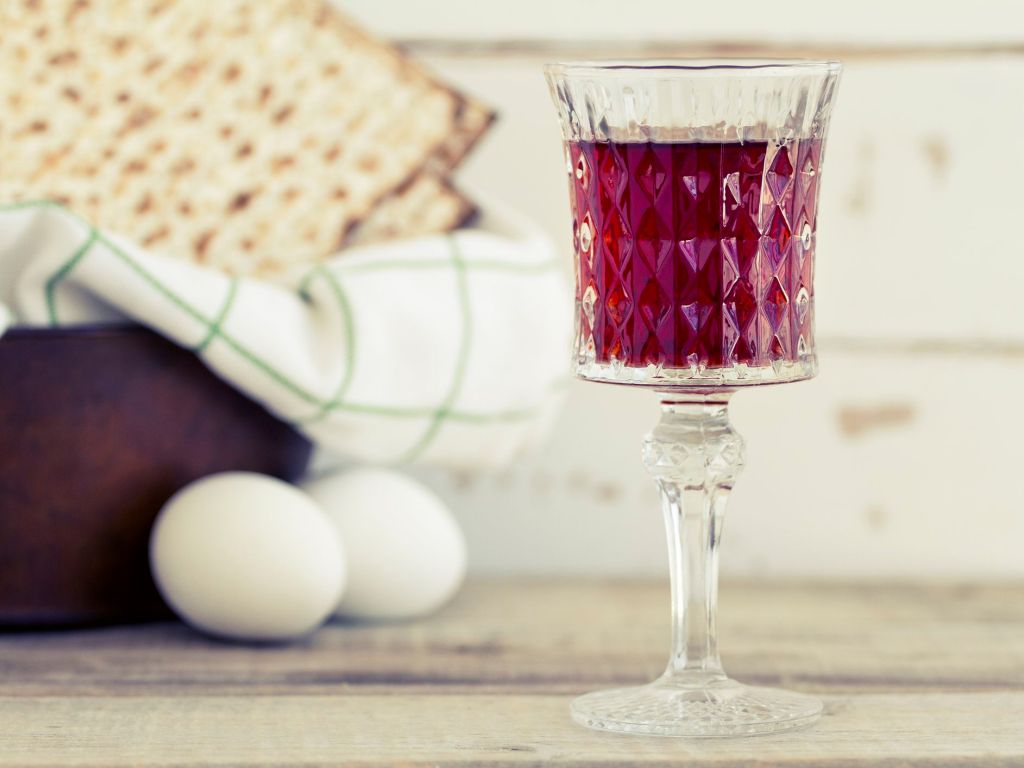
Having grown up in a very conservative Baptist home, I have always known that drinking alcohol was a sin, although I do not recall it being an oft-spoken topic in the home. In church however, it seems like it was a quite common topic among youth leaders and preachers. Many would declare, even with boasting, that alcohol has never touched their lips and for those who have sampled the devil’s brew, much repentance is needed. When faced with questioning such as, “didn’t Jesus turn the water into wine?” the standard response was usually something like, “That ‘wine’ was actually just grape juice because Jesus would never make something that would make someone drunk.” Alternatively, I have heard, “In order to ferment wine, you must use yeast, and yeast (leaven) in the Bible is a picture of sin. Therefore, Jesus would never have done that.” I suppose this also means Jesus would have only eaten unleavened bread at all meals.
I understand preachers and youth leaders are usually operating with one goal, and that is to teach and instruct and shepherd their flocks in the Way of the Master, teaching them to observe all things whatsoever He has commanded. For that cause, I am grateful and give them much honor and respect. However, I also came to realize, as all mature followers of Jesus should, they too are human and subject to teaching their opinions rather than the pure word of Adonai. This goes for all men, including myself. That is why when teaching the Bible, I try extremely hard to leave my opinions-my own understanding-at the door and only say what the Bible and the Holy Spirit give me. My mission is to have a deeper and more perfect understanding of the Father and His Word. That mission is what led me to find out for myself what the Bible says about the consumption of alcohol. What follows is my understanding from the Scriptures using the aid of Strong’s Exhaustive Concordance of the Bible. If I interject my opinion, I will say so. As a non-drinker, my purpose of this study is not to justify my guilt in drinking, nor is it to prove a point about abstinence of alcohol; it is simply to “study to show thyself approved.”
The word “wine” is found in the King James Version 233 times, translated from 10 distinct Hebrew words and 4 Greek words.
- H3196 yayin: fermented, effervesce, intoxication
- H8492 tiyrosh: freshly squeezed, not fermented; often translated as “new wine”
- H7941 shekar: intensely alcoholic, strong wine/liquor
- H3342 yeqeb: vat, trough for catching squeezed juice; “wine vat.” Only occurs in Deut. 16:13
- H2562 chamar: Chaldean word, to boil up; hence to ferment
- H1660 gath: a winepress or vat for hold the grapes in pressing them. Only occurs in Neh. 13:15
- H4469 mamcak: wine mixed with water or spices; often translated as “mixed wine” or “drink offering.”
- H5435 cobe: to become tipsy with alcohol; drunkard; carousal
- H6071 aciyc: freshly-squeezed or trampled grapes
- H6025 enab: a ripe fruit; grape
- G23631 oinos: a direct correlation to the Heb. 3196 meaning fermented grape juice
- G1098 gleukos: from which “glucose” derives; “sweet wine:” highly inebriating
- G3943 paroinos: staying near wine; given to wine
- G3632 oinophlugia: an overflow of wine; drunkenness; excess of wine
For the purpose of this study, I did not include the times “winebibber” or other variants were used because in every instance that those occur it is speaking of drunkenness, so no further clarification is needed. The word wine is translated from the Hebrew yayin 147 times. In perspective, this leaves 86 instances for the rest of the 13 variants of the word wine.Interestingly, the Hebrew texts only use two words that describe freshly squeezed, non- fermented wine: aciyc (4 occurrences) and tiyrosh (35 occurrences). In both instances, the word is referring to the fruit of the vine in its natural state immediately after being squeezed out of a grape.
First mentions…
Wine is first mentioned in Genesis chapter 9 where we see Noah getting drunk sometime following the Flood. He got drunk and fell asleep naked inside his own tent. It was here, inside his own domicile, that he was discovered by his son Ham, who then ridiculed his father rather than cover him up and mind his own business while respecting his father. For this act, Noah placed a curse on his grandson, Canaan. The rest of the story is for another time. In this reference, the word used for “wine” in verses 21 and 24 is the Hebrew word yayin which means to effervesce or ferment and is often used in reference to banqueting. One could rightly conclude this was brought out to be used in times of celebration or joyous occasions. However, this is the same Hebrew word that is used in familiar passages where men got drunk and made poor decisions: Genesis 19 (Lot/Daughters), Esther 1:10 (Ahasuerus), Proverbs 20:1 (is a mocker). This word is the root for “winebibber,” i.e., one who is drunk with wine.
Most Notable Mention
“And Melchizedek king of Salem brought forth bread and yayin (wine): and he was the priest of El Elyon (the Most High God).”
Genesis 14:18
There has been much discussion over who Melchizedek was. On the surface, at the very He is mentioned as “the priest of El Elyon.” I am sure no one can say definitively, but I believe he was the pre-incarnate Yeshua (Jesus). Briefly, I wish to explain why I believe this. First, we look at his name. The Hebrew transliteration is Malki-Tzedek meaning “King of Righteousness.” The prophet Jeremiah calls God Adonai Tzidkeinu which is translated in the English as “the Lord our Righteousness (Jer. 23:6; 33:16).” No one except He is worthy to be called Righteousness. Furthermore, Melchizedek is titled “king of Salem (Jerusalem),” and we know Jesus is the “king of the Jews” and will one day rule Jerusalem again. To top it off, Abram gave Him a tithe (tenth) of all his possessions. Elsewhere in Scripture where we are commanded to give a tithe, it is always given to the Lord, Jehovah. Thus, I do not see how Melchizedek can be any other than Jesus, the son of Jehovah.
Why did I spend a paragraph touching on the tip of the subject of Melchizedek? I did so because here and in the Gospel according to John 2:1-10 we see Jesus handling and giving fermented wine-yayin-to others as a blessing. I will repeat, both Malki-Tzedek in the only time we see Him and Jesus, in His first public miracle, give fermented wine, not grape juice, to God-fearing Hebrews as a blessing. Let us go further. (the Greek equivalent of yayin is oinos and is the most used form of “wine” in the Messianic writings, occurring 32 times.)
Give an Offering of Wine
In the Torah, there are many instances where Jehovah is giving instructions to Moses regarding worship, dietary rules, and regulations on offerings and sacrifices. He provides a list of things the Hebrews can eat and what they are not allowed to eat or even touch (Leviticus 11). This, of course, deals with animals, but it is not a comprehensive list of what is clean and unclean, because all throughout Torah, and specifically Leviticus, Jehovah is giving instructions and teaching on what is required to find favor with Him and to be set apart to Him. Conspicuously absent from any list of prohibited items, however, is wine (except in the cases of Nazarite vows, in which case even the fresh, raw grape is prohibited: Numbers 6:1-4). Seems rather odd to me if it is really an abomination to the Father.
Instead of wine being a prohibited drink, I discovered something I had never seen before. Jehovah required, in addition to blood sacrifices, a drink offering from the priests. I expected these offerings to be pure, unfermented grape juice, the fruit of the vine in its unadulterated form. Imagine my surprise when I discovered the Hebrew word used by Moses was not tiyrosh but rather, yayin. That is right; fermented wine was to be offered up to Jehovah. Below is a sampling of the places where He instructs the Hebrews to make an offering of fermented wine. Would Jehovah require an offering of fermented wine alongside a spotless lamb if it were an abomination? Considering what we know about the nature of Him and how His priest and king, Melchizedek-and later, Jesus-handle it, it is safe to say He does not view fermented wine as an abomination, but rather something to be enjoyed, to the point of offering it up as a Sacrifice.
- Exodus 29:40 “and the fourth part of a hin of yayin for a drink offering.”
- Leviticus 23:13 “and the drink offering thereof shall be of yayin, the fourth part of an hin.”
- Numbers 15:5 “and the fourth part of an hin of yayin for a drink offering,”
- Numbers 15:10 “and thou shalt bring for a drink offering half an hin of yayin, for an offering made by fire, of a sweet savour unto Jehovah.”
Fermented wine used negatively and positively in the same passage
“And Eli said unto her, How long wilt thou be drunken? Put away thy yayin from thee. And when she had weaned him, she took him up with her, with three bullocks, and one ephah of flour, and a bottle of yayin, and brought him unto the house of Jehovah in Shiloh: and the child was young.”
1 Samuel 1:14, 24
In the account of Hannah and her conception of Samuel and his later dedication to the work of Jehovah, we see yayin mentioned. It is first mentioned when the priest Eli chides Hannah for what he perceives as being drunk with too much wine. The second time it is mentioned, the wine is given as an offering alongside young bulls and flour to Jehovah when the child is dedicated. This indicates while wine is susceptible to being misused and overused, it is acceptable an offering to Jehovah and a drink for the priests to partake in.
Difference Between Fresh Grape Juice and Fermented Wine
“and he (Isaac) said, Bring it near to me, and I will eat of my son’s venison, that my soul may bless thee. And he brought him yayin, and he drank. Therefore Jehovah give thee of the dew of heaven, and the fatness of the earth, and plenty of corn and wine (tiyrosh)”
Genesis 27:25, 28
Isaac is blessing his son Jacob and declaring that Jehovah will bless him with a plentiful harvest, and corn and grape juice are specifically mentioned, meaning the fruits of the earth. Jehovah does not make wine, in the fermented sense, but provides the basis for it in the fruits. In this same sense, He does not make bread, but He provides the corn and wheat from which it is made. This iteration of the word is used in the Tanakh only 35 times. Conversely, there is no instance of the word “wine” meaning unfermented juice in the Gospels, Pauline Epistles, or Apostolic Writings. Of the 4 Greek words used therein, for a total of 37 instances, all are referencing fermented grape juices, or wine. The New Covenant equivalent of yayin is the Greek oinos which is the word used in John Chapter 2 where Jesus turned the water into wine at the wedding in Cana.
No Wine = No Blessing
Behold, the Lord maketh the earth empty, and maketh it waste, and turneth it upside down, and scattereth abroad the inhabitants thereof. And it shall be, as with the people, so with the priest; as with the servant, so with his master; as with the maid, so with her mistress; as with the buyer, so with the seller; as with the lender, so with the borrower; as with the taker of usury, so with the giver of usury to him. The land shall be utterly emptied, and utterly spoiled: for the Lord hath spoken this word. The earth mourneth and fadeth away, the world languisheth and fadeth away, the haughty people of the earth do languish. The earth also is defiled under the inhabitants thereof; because they have transgressed the laws, changed the ordinance, broken the everlasting covenant. Therefore hath the curse devoured the earth, and they that dwell therein are desolate: therefore the inhabitants of the earth are burned, and few men left. The new wine mourneth, the vine languisheth, all the merryhearted do sigh. The mirth of tabrets ceaseth, the noise of them that rejoice endeth, the joy of the harp ceaseth. They shall not drink wine with a song; strong drink shall be bitter to them that drink it. The city of confusion is broken down: every house is shut up, that no man may come in. There is a crying for wine in the streets; all joy is darkened, the mirth of the land is gone. In the city is left desolation, and the gate is smitten with destruction.
Isaiah 24:1-12
In this passage, the absence of yayin is equivalent to the loss of joy; no singing, no music and the land languishes and is bitter. Denotes desolation, therefore lack of wine = sadness.
“Behold, the days come, saith Jehovah, that the plowman shall overtake the reaper, and the treader of grapes him that soweth seed; and the mountains shall drop aciyc, and all the hills shall melt. And I will bring again the captivity of my people of Israel, and they shall build the waste cities, and inhabit them; and they shall plant vineyards, and drink the yayin thereof; and they shall also make gardens, and eat the fruit of them.”
Amos 9:13-14
Verse 13 is speaking of the judgement of Jehovah and the harvests that will be destroyed before they can be picked. The mountains shall drop wine because the grapes will be crushed before they can be harvested, signifying the destruction of the fruits of their labor. However, in Verse 14, He declares He will bring them back to their homeland and they will rebuild, planting new gardens and vineyards, and this time, their harvests will mature, and they will be able do enjoy the fruits of their labor and drink the wine that has properly matured and fermented, signifying a length of time in which they will enjoy prosperity and peace. Properly aged wine takes time, and that is something He is promising them.
Warnings against drunkenness
“Woe unto them that rise up early in the morning, that they may follow strong drink; that continue until night, till yayin inflame them!”
Isaiah 5:11
This is a warning to those who are consumed by alcoholism.
“For they shall eat, and not have enough (gluttony): they shall commit whoredom, and shall not increase: because they have left off to take heed to Jehovah. Whoredom and yayin and tiyrosh take away the heart (understanding).”
Hosea 4:10-11
This passage is speaking of the wicked who are consumed with gluttony, whoredom, and drunkenness but will never find fullness or satisfaction in their pursuits of pleasure. The takeaway from this is that food, sex, and wine are all subject to misuse and abuse if not dwelling in the will and spirit of Jehovah.
Solomon, who wrote both Ecclesiastes and Proverbs, can discern the difference between enjoying a little wine for celebration and abusing it the point of foolishness. Consider what he wrote in the following passages.
“Yayin is a mocker, strong drink is raging: and whosever is deceived thereby is not wise.”
Proverbs 20:1
If we partake in wine or strong drink without wisdom and inhibition, and are deceived into thinking there are no consequences, we are not wise.
The words of king Lemuel, the prophecy that his mother taught him. What, my son? and what, the son of my womb? and what, the son of my vows? Give not thy strength unto women, nor thy ways to that which destroyeth kings. It is not for kings, O Lemuel, it is not for kings to drink wine; nor for princes strong drink: Lest they drink, and forget the law, and pervert the judgment of any of the afflicted. Give strong drink unto him that is ready to perish, and wine unto those that be of heavy hearts.
Proverbs 31:1-6
Proverbs 31 says kings (leaders) should not be given to wine because it can cloud the judgement and cause him to be unfair in dealings. This is referring to while sitting on the judgement seat and in official capacities. However, wine is to be given to those who are dying (to ease their suffering) and to those of a heavy heart (to ease their sorrows).
“There is nothing better for a man, than that he should eat and drink, and that he should make his soul enjoy good in his labor. This also I saw, that it was from the hand of God.”
Ecclesiastes 2:24
In the above verse, the word “drink” is shathah (H8354: to imbibe, literally or figuratively, such as at a banquet). See also Ecclesiastes 3:13
We have seen sufficient proof that fermented wine is given as a symbol of prosperity and the blessing of Jehovah, so much so that His original Priest and King, Melchizedek and His son, the Prophet, Priest, and King Jesus gave it personally to others as a blessing. It is even described as being “nothing better” for us to do as enjoyment of the fruits of our labor. However, as with everything else that we can partake of or consume, there are limits
The Apostle Paul does not say much about the consumption of wine, but he does warn the followers of Jesus to not be drunk with wine, choosing instead to be “drunk” with the Holy Spirit, allowing Him rather than alcohol to guide our judgements and decisions.
“And be not drunk with oinos, wherein is excess; but be filled with the Spirit;”
Ephesians 5:18
Jesus Drank Wine
If I haven’t lost you yet, right here is where the most conservative reader may begin to see me as a blasphemer. Before you fire up the pyre and stake or decide to draw and quarter me, please consider the following passages and historical truths.
And he took the cup, and gave thanks, and gave it to them, saying, Drink ye all of it; For this is my blood of the new testament, which is shed for many for the remission of sins. But I say unto you, I will not drink henceforth of this fruit of the vine, until that day when I drink it new with you in my Father’s kingdom. And when they had sung an hymn, they went out into the mount of Olives.
Matthew 26:27-30
The scripture does not explicitly say here that wine was served at the Last Supper, but it does say they were drinking the “fruit of the vine.” An argument can certainly be made that this was unfermented, non-alcoholic grape juice, but to hold to that position is to have a poor understanding of the customs of the day and the preservation methods available to them. We do know the “last supper” was during Passover, which is between the modern-day months of March and April. The harvest of grapes in both ancient Palestine and modern Israel is anywhere between July and September, depending on the variety and weather pattern. For the “fruit of the vine” to be freshly-squeezed, unfermented juice it would have had to be perfectly preserved for no fewer than 6 months and as many as 8 months. Without freezers, this would have been impossible, barring a miracle that is unrecorded. Grapes, once ripened, begin to ferment after 3 or 4 days in the summer heat and can become fully wine within a few weeks, without any manipulation by man. This is due to the natural yeasts that form on the skin of grapes, thus being part of the natural process initiated by Yahweh. Wine in this condition is often 4%-8% alcohol, which is very mild by modern standards. Furthermore, it was usually weakened with water to tame it down more and was often done to make it stretch further and to provide a bacteria-killing medium to drinking water. Remember, clean water was hard to come by until Louis Pasteur and Marie Curie entered the scene in the late 19th century. This is why Paul instructed Timothy:
Drink no longer water, but use a little wine for thy stomach’s sake and thine often infirmities.
1 Timothy 5:23
This is the same book where Paul says a bishop/pastor (which Timothy was in training to be) should not be given to wine (1 Timothy 3:3). So he is telling Timothy to not be given to wine, but to drink it more than plain water in order to correct his stomach or digestion issues. Interesting.
Considering Jesus and his disciples were poor in finances, they most probably purchased cheap wine that was diluted with water. However strong the wine was, we know it was undoubtedly fermented grape juice, even if the alcoholic content was miniscule. The only other possibility is Jesus turning regular water into wine at the Last Supper table. If this happened, all 4 gospels are mute on the subject.
Furthermore, wine was traditionally a staple at the Passover table. To say the Messiah followed all of the traditions of the day would be inaccurate, but it at least appears on the surface that He did consume wine at this singular event, even if He did not at all the previous Passover feasts.
Moving on from there, we see previously that Jesus was accused of being a glutton and a winebibber.
The Son of man came eating and drinking, and they say, Behold a man gluttonous, and a winebibber, a friend of publicans and sinners. But wisdom is justified of her children.
Matthew 11:19
Now I know some will say, “Yeah, but they were lying about the Saviour,” and that would be partially true. However, He was a friend of publicans and sinners. And Jesus Himself said “the Son of man came eating and drinking…” He was not quoting anyone else; He was contrasting Himself with John the Baptist, who was a Nazarite and prohibited from touching the fruit of the vine (Matthew 11:18). Was the Messiah a glutton or winebibber? Absolutely not! For His detractors to say so was an outright lie. But as in most of their accusations, there was a thread of truth, just enough to cause people to doubt Him. (Matthew 27:37 “And set up over his head his accusation written, This Is Jesus The King Of The Jews). It’s interesting that He did not reject their accusations, in life or in death.
The final action of Jesus before death was to partake in sour wine on the cross.
After this, Jesus knowing that all things were now accomplished, that the scripture might be fulfilled, saith, I thirst. Now there was set a vessel full of vinegar: and they filled a spunge with vinegar, and put it upon hyssop, and put it to his mouth. When Jesus therefore had received the vinegar, he said, It is finished: and he bowed his head, and gave up the ghost.
John 19:28-30
Nothing about this occurrence was happenstance: the hyssop (Exodus 12:22) , the vinegar (Psalm 69:21), the cross (Isaiah 53:4-5). While the King James Version says the Messiah was served, and received, vinegar, Strong’s gives us a little bit of insight.
ὄξος óxos, oz-os; from G3691; vinegar, i.e. sour wine:—vinegar.
Strong’s Exhaustive Concordance of the Bible
Historically speaking, sour wine was commonly consumed by soldiers and laborers as a cheap way to quench the thirst by replenishing electrolytes and cooling the throat without the ill-effects of tainted water. Although the taste was undoubtedly worse than modern electrolyte-replenishing sports drinks, the effect was very similar. And no foreman or commanding officer would issue their hired personnel intoxicating beverages while on duty, so we can conclude the mixture that was served to Jesus, while containing fermented wine, was not of the same sort that would produce the effects of intoxication.
Conclusion
It does not take a Hebrew or Greek scholar to see the ill-effects that drunkenness can and almost certainly will produce on an individual, a family, and a society. The abuse of alcohol has ruined many lives and relationships, has been the root cause of fights and indiscretions, and has produced people who are utterly useless to their Creator and consequently everyone else because they are enslaved to it. On a different scale, but just as relevant, so has the abuse of prescription medication, money, food, talents, and even pursuing “the ministry.” All things have the potential to be abused to the detriment of the abuser as well as those affected by him. If one is unable to hold their wine or put it down when they have had enough, it is wise to reject drinking, and it is a sin to continue in these ways.
The Torah and the Prophets make no prohibition against the consumption of wine, although they show examples of what happens when one overindulges. The only time there is a strict rule against the consumption of wine, the same restriction is placed on even raw grapes, and that is when one takes the Nazarite vow (or has it made for them, such as in the case of Samson). In the Apostolic writings, the only time wine is brought up is when elders of the church are told to not be “given to much wine,” meaning of course that they should not be drunkards, or perhaps even daily drinkers. This would have been the perfect opportunity for Paul to use the word “any” in place of “much,” effectively prohibiting the consumption of wine at all. But he did not. Considering this, and the other places we have studied, it seems clear to me the occasional participation of wine in reveling or celebration is considered not only healthy and good, but to be enjoyed without guilt.
For someone to say it would have been a sin for Jesus to consume wine, they would also have to conclude that wine is a sin for all, for He subjected Himself to the same standards and temptations we are held to. However, I think I have sufficiently shown to anyone who has allowed themselves to search the Scriptures that the Father, throughout 66 books, hundreds of commandments and thousands of words, did not prohibit the moderate consumption of wine.
Perhaps the most important part of my study is what is to follow. If a person’s personal convictions disallow the consumption of alcohol, but they break with their convictions and consume what they believe to be a sin, they need to repent, for they have sinned. I believe the Biblical basis for this comes from James.
“Therefore, to him that knoweth to do good, and doeth it not, to him it is a sin.”
James 4:17
This may be a stretch; therefore, I want it to be clear that this is my opinion, but I believe that this passage has a mirrored statement that is unwritten. For instance, if you know to do good, and doeth it not, to you it is a sin, then logic dictates that if you know to NOT do something, but you do it, to you it is a sin. The reason for this is if you believe something is wrong to do, you believe you would be sinning against the Father by doing so. Therefore, if you go ahead and do that thing, you are rebelling against the authority that you believe prohibited it. The rebellion of the heart is what causes that to be a sin.
Finally, we should strive to never be a stumbling-block to the brethren. The Apostle Paul spoke of a similar issue in 1 Corinthians 8. In that passage, he is speaking about meat being sacrificed to idols. Evidently, there was a practice among the heathens of sacrificing meat to the pagan idols, but it was made available to eat afterwards, presumably in its “blessed” condition. He starts by saying idols are nothing but manmade objects and should be rejected, but are harmless because they are dead, so therefore the meat is just as worthy to be eaten after they are given to idols as it was before. However, this disturbed some recent converts. He writes,
“Howbeit there is not in every man that knowledge: for some with conscience of the idol unto this hour eat is as a thing offered unto an idol; and their conscience being weak is defiled. But meat commendeth us not to God: for neither, if we eat, are we the better; neither, if we eat not, are we the worse. For if any man see thee which hast knowledge sit at meat in the idol’s temple, shall not the conscience of him which is weak be emboldened to eat those things which are offered to idols; and through thy knowledge shall the weak brother perish, for whom Christ died? But when ye sin so against the brethren, and wound their weak conscience, ye sin against Christ. Wherefore, if meat make my brother to offend, I will eat no flesh while the world standeth, lest I make my brother to offend.”
1 Corinthians 8:7-13
What Paul is saying here ties in with my previous paragraph; if someone who is weak views drinking wine as a sin, and they observe you, who are considered to be an authority or more mature than they in Christ, partaking of alcohol, it may cause them to either partake as well, thus violating their weak conscience, or it may cause them to fall away altogether, seeing you as a hypocrite or a false authority. Paul says it is better to take the high road and abstain than to cause them to stumble, or worse, fall away. Let not our liberty be the cause for someone who is weaker to fall away. Our goal as followers of Yeshua Messiah is to point others to Him and to disciple them up when they are converted. I am not willing to let wine get in the way of that.
Another interesting article on this subject can be found at https://letgodbetrue.com/bible-topics/index/heresies/did-jesus-make-and-drink-alcoholic-wine/
Spurgeon, the “prince of preachers,” the beloved Baptist minister in the 19th century, spoke on this topic on December 23, 1860 at Metropolitan Tabernacle. The full sermon can be found here: https://www.spurgeon.org/resource-library/sermons/a-merry-christmas/?fbclid=IwAR3ZXQKYgG5aJVOgii4i4cpKWRUFfVRQ0d7AsHsKGRVS0MTQeqB3Vl_GG4o#flipbook/
 The Objective Perspective