
All Scripture quotations are from the King James Version unless stated otherwise.
When I first began my journey into becoming Torah pursuant, I had never heard the term, Hebrew Roots, or the growing movement that uses that name (and as a point of clarification, I do not identify or associate with the Hebrew Roots movement). However, as I’ve plodded along The Way in seeking the will of Adonai regarding this change of focus, I learned the term carries with it a host of mixed ideas and connotations, and they range widely from odd but sincere to weird and harmful. Interestingly enough, so do the mainstream Christian denominations and sects. I should know, as I’ve grown up amongst them for the past 30 years. But this is not about them, per se, so I digress.
I do not identify or associate with the Hebrew Roots movement
I have heard from many Christians who boast (although they would argue against that term) that we are not bound by the Torah or Covenants because those were Jewish things and Jesus did away with those because of their unbelief. Furthermore, “I ain’t Jewish; I’m [insert anything except Jewish] so I’m free to do and eat whatever I want!” These people are severely lacking in one key factor: all believers have Hebrew roots.
The purpose of this study is not to delve in the Hebrew Roots Movement, but into the doctrine of Hebrew roots (lowercase “r”). For this purpose, we will be chiefly in Romans 11. The key verse that triggered this discussion between the Holy Spirit and I was verse seventeen.
And if some of the branches be broken off, and thou, being a wild olive tree, wert grafted in among them, and with them partakest of the root and fatness of the olive tree;
Hebrews 11:17
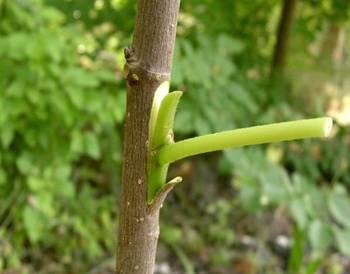
The process of grafting is quite fascinating. There are many methods, but for those unfamiliar, a person can cut off a branch of a tree, let’s say, an orange. At the severed end, a notch is cut in the wound. Then one takes a branch from another tree of a different variety and sharpens the end of the branch into a wedge. This end is then inserted into the notch of the first branch. The two joined branches are then bound tightly, usually with plastic wrap or some other tight seal and then left alone. Over time, nourished by the healthy root, the wound begins to heal and eventually the grafted-in branch becomes part of the main tree. If you chose a lemon branch, it will one day produce lemons although it’s host and nutrient supply is an orange tree. In reality, the lemon branch is just as much part of the orange tree as the orange branches. If the root dies, the branch dies with it. If it flourishes, so do the fruits. This is one of the ways man has learned to manipulate nature that is quite captivating to me. This interesting video shows this technique.
In Romans 11, Paul is using the method of grafting to describe what is taking place in his current time as well as in ours. He is writing to believers in Rome (c. 1, v. 7) and giving instruction and doctrine. Although some were Jews who believed (such as he was), many were Gentile believers. In fact, he explicitly states who he is writing to in our current chapter.
For I speak to you Gentiles, inasmuch as I am the apostle of the Gentiles, I magnify mine office:
Romans 11:13
To recap where we are; Romans is written to mostly Gentile believers living in Rome. This letter to them describes how they are considered to be grafted in as a wild olive branch into a cultivated olive tree. In short, Hebrews are pictured as the native, or cultivated olives and Gentiles (all non-Hebrews) are the wild, non-domesticated olives.
Going back to our opening verse, Adonai cut off the branches of the olive tree, but why? Why did he sever the limbs of the chosen domestic tree and graft in the wild ones?
Well; because of unbelief they were broken off, and thou standest by faith. Be not highminded, but fear: For if God spared not the natural branches, take heed lest he also spare not thee.
V. 21-22
The branches – the Hebrew people – were broken off because of their unbelief. Their sin was not unbelief in Adonai, for they followed His Torah and knew who He is. Nay, their unbelief was in the Messiah. So in their place Adonai grafted in the wild olive, the wayward and feral nations who had before then never known the power and person of Yahweh.
Consider this: the only thing that separated the Hebrews from the Gentiles was the Torah. Torah (the law, the word of Elohim) existed before Moses, but was codified on Mt. Sinai and with it was a covenant promise. His promise and calling is without end (v. 29).
But the counsel of Adonai stands forever, his heart’s plans are for all generations.
Psalm 33:11, Complete Jewish Bible
We’ve already drawn the conclusion that every nation is pictured as an olive branch. The differentiation is between natural or wild. So we’re all olives. Ok. If Gentiles are wild, then the root of the wild tree could be deduced to non-adherence to Torah, since Torah is what set the Hebrews apart. Therefore, if the Hebrews are the branches of the natural olive tree, what is the root? You guessed it; Torah!
Some will argue that God, and not His law, is the root. That’s fine if one wants to argue that position. I insist that God and the Word of God are One. Isaiah made it clear that Messiah is the Branch, and John made it abundantly clear that Messiah is the Word.
In the beginning was the Word, and the Word was with God, and the Word was God. And the Word was made flesh, and dwelt among us, (and we beheld his glory, the glory as of the only begotten of the Father,) full of grace and truth.
John 1:1, 14
But a branch will emerge from the trunk of Yishai (Jesse), a shoot will grow from his roots. On that day the root of Yishai, which stands as a banner for the peoples – the Goyim (Gentiles) will seek him out, and the place where he rests will be glorious.
Isaiah 11:1, 10, CJB
The majority of Isaiah chapter eleven is a prophesy pertaining to the millennial reign of Jesus, but it’s very clear in the two passages above that it is a Messianic prophesy. Yeshua (Jesus) is the Word (John 1:1) and the Shoot (Branch) (Isaiah 11:1).
The Branch in Isaiah came out of the stem of Jesse. The stem came from the root. It is a picture of a lineal ancestry. We know that Jesus was a direct descendant of Jesse through his son, David. Jesse, like most Hebrews, was a descendant of Abraham. The Abrahamic Covenant, along with the Adamic, Noahic, and Mosaic Covenants, is part of the root of the natural olive. These were the foundations of the Hebrew people’s culture, identity, and religion. When Adonai gave Moses the Torah (instructions) on Mt. Sinai, He was giving the branches the instructions on how to fulfill the Will of the Root.
Furthermore, Jesus Himself said He was the true vine.
I am the true vine, and my Father is the husbandman. Every branch in me that beareth not fruit he taketh away: and every branch that beareth fruit, he purgeth it, that it may bring forth more fruit.
John 15:1-2
Bringing it all back home to Romans 11, I remind the reader that the branches that were broken off were the Hebrews who did not believe that Yeshua was the Branch from Jesse. These are the ones who did not bear fruit because while they were rooted in Torah and the words of Adonai, they did not believe them from the roots up. The Jews did not recognize the true Vine, the one who bridged the gap between root and branch. So they rejected the vine.
The husbandman, The Father, did not pluck up the Hebrew root.
Any arborist, horticulturalist, and gardener knows if a branch of a plant is diseased or not producing, they must remove it in order to make room for the productive and healthy branches that will produce fruit. In the example of the olive trees in Romans 11, the branches that were dead or unproductive were removed to make room for a new strain of olive. The wild olive was cut away from its root and grafted into the natural olive’s root. It’s identity, sustenance, and growth now comes from drawing from its new, adopted root. The natural olive didn’t change at all, except to accept the grafted-in wild olive. Furthermore, the other olive branches have no say in the matter, for it is the husbandman, or gardener, who makes the cuts and modifications.
I don’t know if there could be any clearer picture of the adoption of Gentile into the Hebrew. The main root – the Covenants and Torah – has not changed. The husbandman, The Father, did not pluck up the Hebrew root. Nay, He simply pruned away the unfruitful, unbelieving Jews and left a remnant of those who believed. He then grafted, and continues to today, the Gentiles, who were the wild olives; sincere but pagan. These believing Gentiles then receive all the blessings of the Covenants, including salvation. Is their salvation in the root? No, not per se, for their salvation is in believing in the Vine, Jesus the Messiah. We Gentiles may not have a direct ancestry to Jesse (or Abraham), but we enjoy the blessings of the Vine because we are grafted into the Covenants through the grace of the Gardener.
How can we accept the Vine but reject the Root? Is that even possible? Paul has a warning for us Gentile branches that we would do well to pay attention to.
Boast not against the branches. But if thou boast, thou bearest not the root, but the root thee. Thou wilt say then, The branches were broken off, that I might be grafted in. Well; because of unbelief they were broken off, and thou standest by faith. Be not highminded, but fear: For if God spared not the natural branches, take heed lest he also spare not thee.
Romans 11:18-21
We should not let pride cause us to boast against the ethnic Jews, for we are just as susceptible to being pruned away. We were plucked from our pagan, unbelieving cultures (albeit several thousand years removed, for some) and grafted into the cultivated Hebrew root, not because of our own merits or superiority, but because the Father, Adonai, will not let His Word return void (Isaiah 55:11). His root is eternal, and He desires that we enjoy the fruits of it alongside, and equal to, the original branches that also believe. Shalom!
For there is no difference between the Jew and the Greek: for the same Lord over all is rich unto all that call upon him.
Romans 10:12
 The Objective Perspective