Thoughts on the Independent Fundamental Baptist Movement

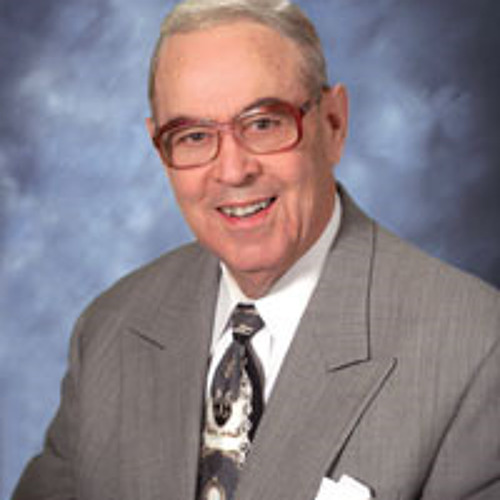
Jack Hyles, pastor of First Baptist Church, Hammond, Indiana and founder of Hyles-Anderson College

Independent Fundamental Baptists are not the problem when it comes to abuse and coverups.

Now that I’ve made that statement, I’m going to make some more that may not be quite as welcome. Before I start, I do want to make this known: I have not seen “Let Us Prey: A Ministry of Scandals,” although I intend to, eventually. However, many people that I know have seen it and have told me what it contains. I am not going to comment further about the documentary because to do so would be dishonest, considering I would be commenting on hearsay.

My background

I joined an Independent Fundamental Baptist (IFB) church by baptism when I was 12 years old. I remained in that circle until I left to pastor a Southern Baptist (SBC) church at age 36 (in March 2023). For 24 years I was a member and served in IFB churches, surrendered to preach in an IFB church, briefly attended an IFB college, was married in an IFB church, and was completely immersed in that culture. If you name a prominent IFB preacher or evangelist, I’ve either heard him preach, read his works, or heard him referenced in sermons for most of my life.

I have known many godly people within the IFB circle. In fact, most of the Christian influences I’ve had in my life come from that sphere, and I can honestly say they were for the most part very godly men, at least as far as I can tell. The Gospel of Jesus Christ is preached faithfully and boldly from pulpits, on street corners, and on foreign mission fields daily by IFB lay preachers and ordained ministers alike. In my experience, the majority of people are salt-of-the-earth believers in Christ, doing their best to follow His example on earth.

However (you had to know I was getting to this), some of the most damaging practices I’ve seen in 24 years of being an IFB Christian have come from those who are entrenched the deepest in the “Fundamental” aspect of IFB. Now, I know at its root, fundamental means they stick by the stuff, holding fast to the fundamentals of the faith. Unfortunately, though, the denomination as a whole (although they would eschew the affiliation with the word “denomination”) has drifted into isolationism and a form of legalism that is very dangerous and ungodly. I know I am speaking in general terms most of the time when I refer to the IFB, so please understand that. But it is hard to find anyone in that movement (pastors, at least, if not lay people) that won’t say in word and/or in practice one or all of the following:

  • If a woman wears pants, she’s a hussy in need of repentance
  • The KJV 1611 is the only inspired word of God in English; all others are per-versions
  • Calvinism is a heresy that is worse than atheism
  • If you don’t go to church 3 times a week (and more if the man of God (MOG) deems it necessary), you are a backslider
  • The MOG is not to be questioned or held accountable
  • Beards are ungodly and unbecoming for a MOG
  • If you don’t stand with Israel, Back the Blue, or get goosebumps when the National Anthem is played in church on July 4th, you are a communist and/or a Democrat
  • If you don’t homeschool your children, or (better yet) put them in the church’s school, you aren’t right with God
  • Don’t drink Diet Coke from a can because from a distance it could be mistaken for a beer

There’s more, but this is just a small sampling of the things I have personally heard over the years. Granted, most of these are not things my pastors have said, but the preachers who filled their pulpits or taught classes in Bible College certainly did. In Bible College, I was pressured to fully subscribe to the high-pressure salesmanship, I mean evangelism, of the ministry; this was a task I failed to accomplish. Later, when in a different church, my wife (who was then my fiancée) was taken to task by some of the leaders because she picked me up from work when my car was broken down. The crime? She did not bring a chaperone (mind you, this was about 1 month before our wedding). Another time, she was chided by the pastor’s wife because the collar of her shirt was 3 fingers’ width from the collarbone, rather than the prescribed 2 fingers’ width. There are many other examples I could share from personal experience, and hundreds more that I have seen or heard from other people.

The problem

This is a major problem that I think actually stems not from the Fundamentalism, but from the Independent part. They hold to “no creed but Christ,” which basically means, each church is only beholden to their pastor’s personal interpretation of the Bible. And, let’s be honest, if he was trained by an IFB pastor or school, chances are his interpretation of the Bible is Jack Hyles‘ interpretation of the Bible. But it’s worse than that, because much of the abuse, tyranny, and legalism is not even remotely an interpretation of the Bible. Sometimes it is framed as such, with taking verses grossly out of context, but often times it is packaged in the generic wrapping of “godliness.” It is extra-biblical, but arbitrary by nature because of being independant. Again, this is a general observation because there are always exceptions. But in an urgency to separate from the centuries-old creeds and confessions of Calvinistic Baptists that gave birth to Charles Spurgeon, Adoniram Judson, William Carey, and the Baptist forefathers of America, they embrace the creeds of Arminians and Dispensationalists like John R. Rice, Jack Hyles, and C.I. Schofield. The “old paths” are actually nothing more than divergent paths that are sometimes less than 100 years old. And their creed is that they have no creed, which is kind of amusing to the outsider.

Old is not always better, and I freely acknowledge that. There are heresies that Paul, James, and Peter had to combat in their day, and some of them persist until the present. However, in an effort to break away from the impure practices in the SBC or other Baptist affiliations, they have created a monster that is swollen with pride and new ideas. I have lost track of how many sermons I have heard that barely went to Scripture but were a diatribe against all other unworthy Baptist affiliations or Bible versions or doctrines. To quote one I heard earlier this year, “I thank God I am not a Calvinist!” as if it were an incurable disease. Never – and I mean not once – have I heard an IFB preacher attempt to explain where the Calvinists went wrong with their interpretation of the words “elect,” “predestination,” or passages like Romans 9, for example. No sir, but they have spent countless precious hours railing against it!

The IFB is a doctrine of legalistic “holier than thou,” at its core. It reminds me of the Pharisee in Luke 18:10-14. It saddens me.

Unfortunately, it is this dedication to outward Godly appearances that has fostered a culture of coverups of abuse and ungodly practices. Sadly, I’ve seen it happen. Thankfully I was not involved and did not know about it until years later, but people I and my wife served alongside were involved in scandals and abuse, some as victims and others as the perpetrators. This mindset of not holding “godly” men accountable to maintain appearances is quite prevalent, but I digress.

I thank God for the many faithful and Godly men and women in the IFB who serve the Almighty. Many of them put me to shame in their dedication and perseverance. However, I would be remiss if I did not make this post, considering I was in that world for so long.

I don’t write this because I am an all-wise “man of God”, or a pastor, or any of that, but because I saw things while I was in that world that I could not speak about then, and that is partly because I couldn’t see clearly or how deep the problem was until I was out.

I don’t write this to anger anyone or to upset anyone, although I know some will experience both emotions.

I write this because people who are in the IFB may be tempted to circle the wagons after the aforementioned documentary hits the screens. Pastors are already speaking out against it and defending the IFB movement. Rather than circling the wagons (which has been going on far too long), you need to be looking within the circle to see if the enemy is inside the circle with you. The enemy is not the SBC or Reformed Baptist church down the road who uses the ESV or doesn’t sing only Fanny Crosby songs in church. Your enemy is my enemy, and that is the wolves in sheep’s clothing. Not all wolves look like Kenneth Copeland. Some look like Jack Schaap.

Independent Fundamental Baptists are not the problem when it comes to abuse and coverups. The Roman Catholic Church has done the same abuses and coverups for much longer. The Methodists’ and Episcopalians’ embrace of sexual immorality is proof of their apostasy. The SBC is full of red flags. There are problems everywhere. Independent Fundamental Baptists need to acknowledge when there is a problem and stop covering it up to save their ministry and reputation. That reputation has already been stained. Now I exhort you to go make restitution and repent and bring honor to the Lord God Almighty’s reputation.

Coming Out

Apparently October 11 is the annual “Coming Out Day” as recognized by gay, lesbian, and all other divergent sexually immoral individuals who wish to make their friends and family aware of their sexual practices.

Being distant from that side of things, I was unaware of this being an actual awareness day, but I suppose that is something that will be remedied. The small but growing population of people who make this their agenda will certainly see to it that we all recognize “COD” as a national holiday.

As I took care of some chores this morning, Adonai gave me a verse to ponder. The more I considered it, the more I realized the term “coming out” is another factor of Christianity that is being hijacked by the Sodomites and their allies. Just like the rainbow, and human sexuality in marriage, they have taken something beautiful that was created by Yahweh and co-opted it into something that turns His stomach. Satan is the master counterfeiter, and he is certainly skilled in what he does, but just like with currency, someone who knows and studies the Master craftsman can easily spot the counterfeit, and has a duty to call it out.


Wherefore come out from among them, and be ye separate, saith the Lord, and touch not the unclean thing; and I will receive you.
2 Corinthians 6:17

Yahweh is calling us to come out. Come out from being unequally yoked together with unbelievers. Come out from the darkness. Come out from idolatry. Come out from fellowshipping with infidels and wicked people. This is the doctrine of separation. Believers in Messiah are to come out of the world and resist it. Resist its hold on us, its influence over us, and its appeal to us. We are not to fit in. We are not to be accepted.This is not to say we should be unpleasant, nor should we head for the hills and become hermits or live in communes. No, we are to be a light on a hill, shining for all to see (Matthew 5:14-16), but when lovers of darkness see a light, they will seek to extinguish it. If we allow our light to be taken by the darkness, it will be put out. We will cease to be a witness, and thus will no longer be effective for our Messiah.

Christians of every stripe, heed these words! You MUST be a light in this dark world! Messiah promised His mission and message would be a target of hatred by the dark forces of this world, and YOU are not immune to their attacks, but that is the whole point. We are not called to be friends to wickedness! No, we were called first to repentance, then to a relationship with our Saviour, then to evangelism and discipleship, and with all of this is the duty to separate ourselves from the ways and desires of the world. Of wickedness.

So come out and show the world what true coming out looks like. Not for our own glory, but for the glory of Yeshua HaMoshiach, Jesus the Messiah!

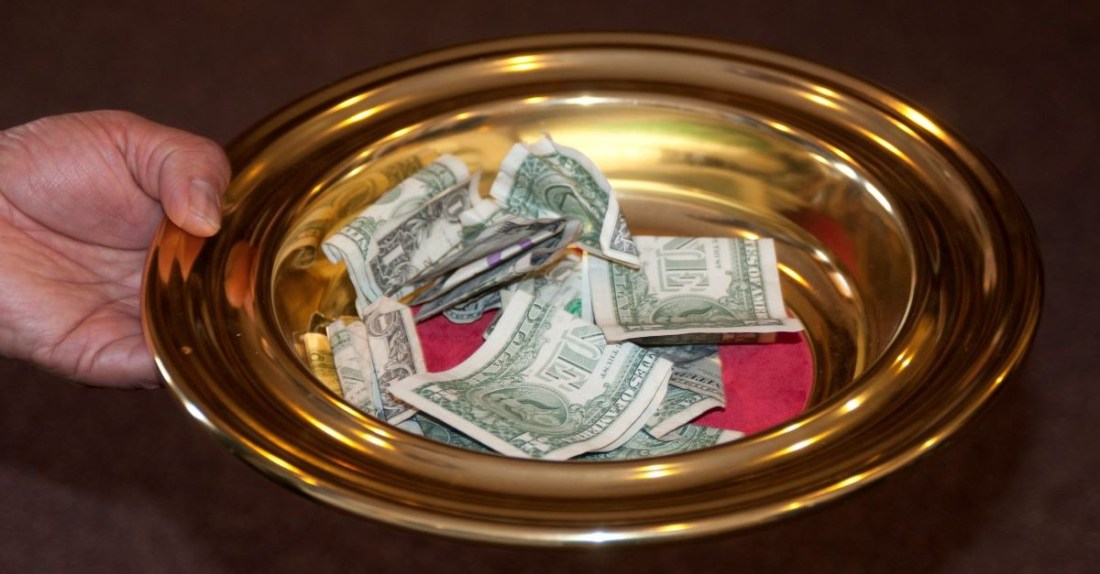
Is Tithing Still A Commandment?

“If you don’t pay tithe, the Bible says you are robbing God and are under a curse. This curse cannot be removed by your good works or the fact you are born again. You can only reverse this curse if you start paying tithe. Tithe is the only key to prosperity and God’s blessing…Those who don’t pay tithe are robbing God because all income is from God.”

Prophet Owusu Ansa. (Ansa 2013)

The above statement is all too familiar to me, not because I heard Prophet Ansa speak it, but because I have sat through countless sermons in a half-dozen Baptist churches throughout my lifetime where this very verbiage and warning was expounded upon. I know I am not unique in hearing this, because probably the number one complaint I have heard from those who have left “the church” from a variety of denominations is that all the preacher did was ask for money, money, money. While I cannot honestly agree that money is all the preachers talk about, it is a perennial topic that gets multiple sermons devoted to it. IndependentBaptist.com echos this same charge:

“Tithing is not charitable giving. It is more understood to be a form of debt to God for giving you wealth. You can call tithe the interest or usury. You give to charities. You don’t give to the IRS or your school loan agency or your bill collectors, you owe the IRS, your school loans, and your bills. Nowhere in the Bible does the tithe ever been [sic] equated with charitable giving.”

IndependentBaptist.com, n.d.

Rather than continuing to quote men on this subject, let’s return to the source, the Word of Elohim. There are multiple references to the tithe in Scripture (thirty-two to be exact, in the KJV), and my goal is to unpack these verses in this study and see for the reader’s benefit what the Scripture says. The first verse we will look at is the most common one I’ve heard cited, and the very passage Prophet Ansa quoted in his article on tithing. 

Even from the days of your fathers ye are gone away from mine ordinances, and have not kept them. Return unto me, and I will return unto you, saith the Lord of hosts. But ye said, Wherein shall we return? Will a man rob God? Yet ye have robbed me. But ye say, Wherein have we robbed thee? In tithes and offerings. Ye are cursed with a curse: for ye have robbed me, even this whole nation. Bring ye all the tithes into the storehouse, that there may be meat in mine house, and prove me now herewith, saith the Lord of hosts, if I will not open you the windows of heaven, and pour you out a blessing, that there shall not be room enough to receive it. – Malachi 3:7-10

Context is Everything

Honest and wise hermeneutics require the reader to study each verse and passage within the context of which it was written. Therefore, it is important to understand both who the aforementioned passage was written to and why it was written. From here, I would like to point the reader to Chapter 1, Verse 6. Here the Word of Yahweh Tsebaoth, through Malachi, addresses “O priests, that despise my name.” He then says, “And ye say, Wherein have we despised thy name? Ye offer polluted bread upon mine altar; and ye say, Wherein have we polluted thee? In that ye say, The table of the Lord is contemptible.” (v. 6b-7) Chapter 2 begins with the address, “And now, O ye priests,” signifying He is speaking again to the priests. Yahweh never breaks from this focus throughout the rest of Malachi’s letter. When we get to Chapter 3, Verse 8, we see again the question, “Wherein have we?” followed by Yahweh’s answer. In all of these verses, Malachi records the priests’ questions and Yahweh’s answers to them. The indictment of the priests by Yahweh reminds me of the same corruptions committed by the sons of Aaron, and later, the sons of Eli. The priests have violated and desecrated the temple as well as their ministerial positions. Nehemiah, a contemporary of Malachi, wrote about this in Chapter 13:4-5 of his letter. “And before this, Eliashib the priest, having the oversight of the chamber of the house of our God, was allied unto Tobiah: And he had prepared for him a great chamber, where aforetime they laid the meat offerings, the frankincense, and the vessels, and the tithes of the corn, the new wine, and the oil, which was commanded to be given to the Levites, and the singers, and the porters; and the offerings of the priests.” In this context, we understand the priests were robbing the storehouse of the tithes and giving them to the enemies of Judah, rather than using them in their proper manner: to maintain the house of Yahweh and to pay the wages of the laborers, musicians, and non-levitical priests. 

The fact that there was even a tithe at all does prove that the people were paying a tithe, otherwise the priests could not rob it. This tithe was commanded in the Mosaic Law (Lev. 27:30; Deut. 14:22) for the nation of Israel and they were to bring a tenth of all of their firstfruits of flock and field. This tithe was brought to the priests, who then filled the storehouses with it and were charged with disbursing it on an as-needed basis (Neh. 10:38). Nehemiah, in the thirteenth chapter of his letter, bears witness that the returned Israelites indeed were paying their tithes, although they were being embezzled and stolen by the priests. Since Nehemiah and Malachi were writing in the same period, to the same people, about the same topic – tithes – we can know that Malachi’s phrase for ye have robbed me, even this whole nation must mean something different than the common interpretation, that is, that the whole nation was robbing Yahweh of His tithes. Indeed, this is an example of the grammar in the king’s English in the KJV making things slightly confusing. Either the verbiage is saying the entire nation is collectively robbing Yahweh by not paying His due, or it means something akin to this: “you are cursed, even this whole nation is cursed, because you have robbed me.” This is not implausible because often a large group of people, even an entire nation, is cursed and suffers for the sin of others (re: Achan at Ai, David in numbering the people, etc.). Since I believe the former explanation seems to contradict Nehemiah’s account, I hold to the latter belief. However, I do accept the possibility that both could be true; the faithful were paying their tithes, but the priests were stealing it, all while the rest of the nation refused to pay theirs. This is entirely possible, and warrants further study on the topic, but I will not explore that further for this study.

References to Tithing in Scripture

Briefly, I would like to outline some of the occurrences of the word “tithe” contained in Scripture.

  • Genesis 14:20 “And blessed be the most high God, which hath delivered thine enemies into thy hand. And he gave him tithes of all.”
    • Melchizedek, the priest of El Elyon (the most-high God) blessed Abram, who in turn gave him tithes. This was a freely-given gift, and not a commandment
  • Leviticus 27:30 “And all the tithe of the land, whether of the seed of the land, or of the fruit of the tree, is the Lord’s: it is holy unto the Lord.” (also see verses 31-32)
    • What land is Yahweh speaking of? The Promised Land, of course. The land of the Mosaic Covenant
  • Numbers 18:24 “But the tithes of the children of Israel, which they offer as an heave offering unto the Lord, I have given to the Levites to inherit” (see also verses 26, 28)
    • Who was to give the tithes, and to whom? The Israelites to the Levites.
  • Deuteronomy 12:17-18a “Thou mayest not eat within thy gates the tithe of thy corn, or of thy wine, or of thy oil, or the firstlings of thy herds or of thy flock, nor any of thy vows which thou vowest, nor thy freewill offerings, or heave offering of thine hand: But thou must eat them before the Lord thy God in the place which the Lord thy God shall choose”
    • The Israelites were permitted to eat their tithes of their crops, not in their own homes, but in the place Yahweh chooses. This was the yearly tithe, and it was to be used in conjunction with worship, such as on feast days. (see also 14:23)
    • Chapter 14:24-26 says if the distance to the set-apart place was too far, they were permitted to sell their tithe for money and use to buy “whatsoever thy soul lusteth after,” including wine, strong drink, or meat, and to enjoy it with Yahweh’s blessing.
  • Deuteronomy 14:28 “At the end of three years thou shalt bring forth all the tithe of thine increase the same year, and shalt lay it up within thy gates:”
    • Every third year, they were to lay up the tithe from that year and it would be collected by the priests from each city and each home. (see also 26:12)
  • Matthew 23:23 “Woe unto you, scribes and Pharisees, hypocrites! for ye pay tithe of mint and anise and cummin, and have omitted the weightier matters of the law, judgment, mercy, and faith: these ought ye to have done, and not to leave the other undone.”
    • Jesus is warning the religious elite who boast in their tithing, but do not practice the more important functions of the law (see also Luke 11:42)
  • Luke 18:11-12 “The Pharisee stood and prayed thus with himself, God, I thank thee, that I am not as other men are, extortioners, unjust, adulterers, or even as this publican. I fast twice in the week, I give tithes of all that I possess.”
    • Again, this Pharisee is boasting in his faithfulness to tithe, wrongly assuming it makes him acceptable
  • Hebrews 7:5-9
    • Not quoted here for space consideration, but this passage is comparing the priesthood of Jesus with that of Melchizedek, and addressing how even the Levites, who received tithes, tithed to a higher being through their head, Abram.

What is the tithe?

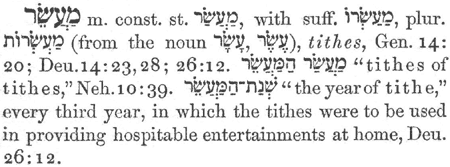
מַעֲשֵׂר maʻăsêr; a tenth; Strong’s H4643

Something that is interesting to note is that the tithes in the Old Testament are always edible, and never monetary. This is not due to the lack of a currency, or because the Israelites were an agrarian people, but because the tithe was to take care of the priests, Levites, and the poor, widows, and fatherless. Food, wine, and oil was over and above more important to someone struggling to survive, or with no inheritance, than gold or silver. The Levites would have the ability to sell some of the excess for coins, but this was not commonplace. The tithe was not a salary for the priests, nor was it for the improvement of the tabernacle/temple. It was strictly for the physical well-being of the intended recipients. When there was a “building project” or a need to be met for the edification of Yahweh’s people, they would give offerings voluntarily (Exodus 25:2-4; 2 Chronicles 24:8-11; Acts 4:32-37).

Is the Tithe Still Applicable?

The presentation made by Paul clearly establishes the point that the Old Covenant Law, the Mosaic Law, had authority over the believers. But now through the death of Christ this Mosaic Law has been canceled as the principle of authority over the saint.

(Sherlin)

Dispensational theologians worldwide would agree with Dr. Sherlin that the Mosaic Covenant is not binding to anyone who is a believer post-Pentecost. They will maintain there is one exception, and that being the “moral law,” which is an extra-biblical term for the parts of the Law which seem to be unchanging, natural law (such as the 10 Commandments, et al). If that be the case (and I say “if” because I am not sold on either Dispensational or its counterpart Covenant Theology), where does tithing fall? Is it a moral obligation? If so, why does a specific commandment to Israel, to tithe off the firstfruits of the land of Israel, apply to Gentile believers in the twenty-first century, while another specific commandment to Israel, to rest the land of Israel every 7 years, does not apply to the same Gentiles? Did not Yahweh judge and punish Israel for failing to rest the land as well as failing to honor the tithe? Why does one apply to us and not the other? We have to be careful to not arbitrarily dismiss some of the commandments and cherry pick others for our own theology and tradition.

Returning to Malachi 3, let’s look at verse twelve. “And all nations shall call you blessed: for ye shall be a delightsome land, saith the Lord of hosts.” Is this a promise for the United States? Or is it for Brazil, Ireland, or Zimbabwe? The text is quite clear that this is a promise for the nation of Judah, and specifically the remnant that returned from Babylonian exile with Ezra and Nehemiah. If one can understand that this part of the promise is for Judah only, how can we conclude that the curse as well as the preceding blessings are for us all? It does not make any sense to single out some for application and others for non application. 

So if the tithe was commanded for Israel, to tithe of the fruits of their land, to be given to the Levites in order to feed the priests, widows, fatherless, and poor, is it still a commandment for believers from the first century onward? Strictly speaking of commandments, I conclude that it is not. However, this does not mean that Yahweh cannot or does not give us some of the blessings associated with voluntary offerings, such as described in Malachi. He blesses whomever He chooses to, so He is not bound to only bless those He promised blessings to. If He wishes to “open you the windows of heaven, and pour you out a blessing, that there shall not be room enough to receive it,” then He is sovereign to do so. But He is in no way obligated to extend to us the blessings He promised an elect few, in a land far away, in a time far gone. 

Many have said they have found Yahweh’s blessings in their faithfulness to tithe, and they can do more with the 90% they retain than they could if they kept 100% of their income. I do not deny them that claim, for I understand it quite possibly can be true. 2 Corinthians 9:6-8 makes it obvious Yahweh is pleased when we give freely and cheerfully, “But this I say, He which soweth sparingly shall reap also sparingly; and he which soweth bountifully shall reap also bountifully. Every man according as he purposeth in his heart, so let him give; not grudgingly, or of necessity: for God loveth a cheerful giver. And God is able to make all grace abound toward you; that ye, always having all sufficiency in all things, may abound to every good work.” Notice the theme in Paul’s letter to the Corinthians: bountifully, as he purposeth, cheerful. It is our giving from love that matters, not from obligation or fear of a curse. In fact, in another letter, this one to the believers in Galatia, Paul insists that we are free from the curse of the law. “Christ hath redeemed us from the curse of the law” (Galatians 3:13) Furthermore, nowhere in the entire New Testament does the text indicate that Yahweh curses believers. How can He curse someone who is freed from the curse of the Law and the curse of sin?

“All therefore whatsoever they bid you observe, that observe and do; but do not ye after their works: for they say, and do not. For they bind heavy burdens and grievous to be borne, and lay them on men’s shoulders; but they themselves will not move them with one of their fingers. But all their works they do for to be seen of men: they make broad their phylacteries, and enlarge the borders of their garments,” (Matthew 23:3-5)

The Pharisees (and many modern religious preachers and teachers) place heavy burdens on the people, but Jesus says, “For my yoke is easy, and my burden is light.” (Matthew 11:30)

In American culture, we desire to have pastors who can be on call 24/7, preach three times a week (or more), provide counseling, weddings, funerals, and other ministerial functions pro bono. This is above the requirement in Scripture to have the ability to teach. If we demand a pastor that is available, we have to be willing to pay him appropriately so he can be set aside for the work of the assembly and also provide for his basic needs as well as that of his family. Our culture today demands so much financially that it usually works best if the church has a set salary and a steady offering that allows for this kind of financial stability, and that is something most pastors also desire. While this is not the model we see in Scripture, I would be presumptuous to say it is unbiblical. To take weekly offerings for the maintenance of the building, the pastor’s salary, benevolence, and other needs of the assembly is perfectly appropriate and necessary. Furthermore, we’ve already seen that Yahweh loves a cheerful giver, and is not afraid to bless one who gives from the heart. But we err in believing, and more seriously in teaching that the tithe is a commandment for the New Testament believer with a curse for one who “robs God” by withholding 10% of their income. 

Works Cited

Ansa, Owusu. “You are Cursed if You Don’t Pay Tithe.” GhanaWeb, 5 November 2013, https://www.ghanaweb.com/GhanaHomePage/NewsArchive/You-are-Cursed-if-You-Don-t-Pay-Tithe-291103. Accessed 3 October 2022.

IndependentBaptist.com. “Why Tithing Is Still For The New Testament Church.” IndependentBaptist.com, https://www.independentbaptist.com/tithing-still-new-testament-church/. Accessed 3 October 2022.

Sherlin, Keith A. “The Law of Moses or the Law of Christ?” Essential Christianity, http://www.essentialchristianity.com/20617. Accessed 4 October 2022.

Featured

Woe to Them Who Offend These Little Ones!

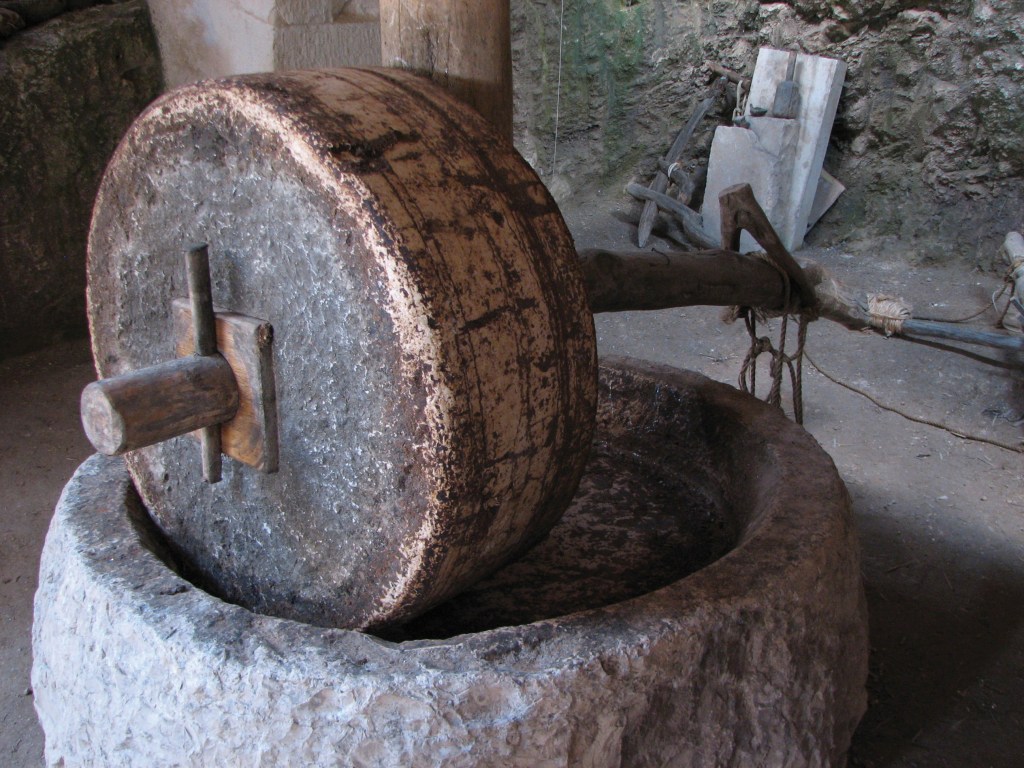
But whoso shall offend one of these little ones which believe in me, it were better for him that a millstone were hanged about his neck, and that he were drowned in the depth of the sea. – Matthew 18:6

This famous quote from the mouth of Messiah is often quoted as proof of the appropriate punishment for those who abuse children. While I would disagree, as this punishment seems far too lenient on someone who would hurt a child, the true meaning of this passage is much more chilling than that, for it speaks not to the molester, but to each and every one of us. This is actually quite obvious at first glance, especially if read in context with the previous verses in the chapter. Because I believe we all have a duty to study the Scripture for what it actually says and not what popular culture or church tradition has taught us, I decided to dig into the passage to get to the bottom of it.

Some will say that any teacher/preacher that has to go to the Greek (or Hebrew) to expound on the Scriptures isn’t a very good practitioner of their calling. That may well be true, but I have found that in my personal studies, going to the original languages to understand original intent is not only wise, but necessary. The reader may wonder why that is so, and I will briefly explain why. No copy of the Scriptures existed in English until roughly mid-16th century. By this time, Greek had ceased to be the language of the known world, and while the translators of the Scriptures had a vast knowledge of the old languages, they were not infallible. These men were not steeped in Greek thought or culture, let alone Hebraic patterns of speech and thought. I have no doubt they did their best, but it is also hard to emphatically say there couldn’t have been something lost in translation. This being true, it is also true that James Strong who in 1890 indexed every word in the King James Version of the Bible in his work Strong’s Exhaustive Concordance of the Bible was not a native Greek or Hebrew speaker but was a scholar and a learned theologian. It is his work that I lean on heavily. It should be noted that “the use of Strong’s numbers does not consider figures of speech, metaphors, idioms, common phrases, cultural references, references to historical events, or alternate meanings used by those of the time period to express their thoughts in their own language at the time.” (citation)

Now fast-forward some 6 centuries, and with Western language and thought prevailing, it is easy for the modern reader to project modern thought and intent into the ancient writings. I do not claim to be any kind of scholar of the ancient languages, but how many of the people preaching or teaching can say that they are, and be truthful in so doing? However, I do possess study helps, written by scholars, and this helps me to get a better understanding of the meaning of the Scriptures. These study helps are available to anyone in the English-speaking world, so it is easy for the reader to verify what I write. By using this method of study, I do not hobble myself with tradition or man’s understanding, which I believe is vital to fully understanding the Scriptures in the way Yahweh intended.

First, let us focus on two key words found in this passage: offend and little ones

Offend

σκανδαλίζω skandalízō, skan-dal-id’-zo; from G4625; to entrap, i.e. trip up (figuratively, stumble (transitively) or entice to sin, apostasy or displeasure):—(make to) offend.

Strong’s Exhaustive Concordance of the Bible, G4624

The word “offend” does not necessarily mean to abuse, either physically, emotionally, or sexually. The meaning is clear: to cause them to doubt the Word of Yahweh or their salvation. This is used in the same frame of thought as “if thy right eye offend thee, pluck it out” (Matthew 5:29). If it causes you to stray from the way or doubt your service to the One to whom you were called, get rid of it.  Skandalízō is also used in Mark 4:16-17 to describe the ones who receive the Word, but wither away when the pressure is applied: “And these are they likewise which are sown on stony ground; who, when they have heard the word, immediately receive it with gladness; And have no root in themselves, and so endure but for a time: afterward, when affliction or persecution ariseth for the word’s sake, immediately they are offended.”

To be offended in this sense means to have doubt cast upon one’s faith in the Messiah. This offense can come in many forms, but to name a few: persecution, heresy, misrepresentation of the Word, being a poor example, leading pridefully (for leaders), or enticing to sin. 

Little ones

μικρός mikrós, mik-ros’; apparently a primary word; small (in size, quantity, number or (figuratively) dignity):—least, less, little, small.

Strong’s Exhaustive Concordance of the Bible, G3398

This word mikrós is translated four different ways in the Scripture. In this passage, it is as the word “little.” Because of the preceding verses, many people automatically assume it means “little children,” but in actuality, that is not what it means at all. Mikrós is the same word used to describe John the Baptist (Matt. 11:11), the mustard seed (Matt. 13:13), and all who shall know Him (Heb. 8:11). It is clearly not referring to children. “Little ones” means young or small in the Lord, or new Christians, lacking in maturity and wisdom, but full of faith. Childlike faith. 

But what do the preceding verses say?

“And Jesus called a little child unto him, and set him in the midst of them, And said, Verily I say unto you, Except ye be converted, and become as little children, ye shall not enter into the kingdom of heaven. Whosoever therefore shall humble himself as this little child, the same is greatest in the kingdom of heaven. And whoso shall receive one such little child in my name receiveth me.”verses 2-5

Little child

παιδίον paidíon, pahee-dee’-on; neuter diminutive of G3816; a childling (of either sex), i.e. (properly), an infant, or (by extension) a half-grown boy or girl; figuratively, an immature Christian:—(little, young) child, damsel.

Strong’s Exhaustive Concordance of the Bible, G3813

In this case, “little child” is translated from the Greek paidíon and has an entirely different meaning than mikrós. Here, it is clearly referring to a young human being, probably pre-adolescent. Children at this age often do not question authority, but trust unwaveringly, even if they do sometimes struggle with obedience, as they learn the battle between discipline and self-will. Young children will believe all manner of things that adults tell them, and they pursue that belief with passion, even if it is false (i.e. Santa Claus). They do this because they trust and have faith in their authorities.

Yeshua is telling his disciples that unless we become like little children in our faith, we will not enter the kingdom of Yahweh. Why? Because when one looks for “adult” answers in science, logic, reason, or adherence to a creed, they lose both their capacity for faith, and their ability to see the Father.

This chapter of Matthew begins with a power play. The disciples ask Yeshua “Who is the greatest in the kingdom of heaven?” As usual, the Master responds with an illustration. He called over a little child and said, “If you don’t become like this child, who trusted me enough to come sit with me-no questions asked-you will not enter Heaven. I called, and she came to me. I reached out, and she responded. You must all have child-like faith, and when you do, it doesn’t matter who is ‘greatest’ in Heaven, because that’s not what it is all about. Furthermore, if someone does have childlike faith and comes to me, God forbid someone turns them away through deed or word. If they caused them to forsake my calling, it would have been better off that they were tied to a millstone and drowned in the sea. The punishment from the Father will be much worse.” (my paraphrase)

We should strive hard to never become hypocrites in our spiritual walk. It may well be that more people have explored church and turned away from it due to its hypocrisy and inconsistency than anything else. I know of countless individuals who attended church for a time, and even professed repentance in Christ, but have fallen away. They are like the seed that the sower planted on poor soil: some have withered away from the heat, but some were plucked away by the birds. Woe unto the believer who applies the heat (doubt) or is the bird (hypocrisy) that snatches them out of their childlike faith! Yeshua says it is better for all involved if you had died before committing that sin. That should sober us all!

Grafted Into the Hebrew Root

All Scripture quotations are from the King James Version unless stated otherwise.

When I first began my journey into becoming Torah pursuant, I had never heard the term, Hebrew Roots, or the growing movement that uses that name (and as a point of clarification, I do not identify or associate with the Hebrew Roots movement). However, as I’ve plodded along The Way in seeking the will of Adonai regarding this change of focus, I learned the term carries with it a host of mixed ideas and connotations, and they range widely from odd but sincere to weird and harmful. Interestingly enough, so do the mainstream Christian denominations and sects. I should know, as I’ve grown up amongst them for the past 30 years. But this is not about them, per se, so I digress.

I do not identify or associate with the Hebrew Roots movement

I have heard from many Christians who boast (although they would argue against that term) that we are not bound by the Torah or Covenants because those were Jewish things and Jesus did away with those because of their unbelief. Furthermore, “I ain’t Jewish; I’m [insert anything except Jewish] so I’m free to do and eat whatever I want!” These people are severely lacking in one key factor: all believers have Hebrew roots.

The purpose of this study is not to delve in the Hebrew Roots Movement, but into the doctrine of Hebrew roots (lowercase “r”). For this purpose, we will be chiefly in Romans 11. The key verse that triggered this discussion between the Holy Spirit and I was verse seventeen.

And if some of the branches be broken off, and thou, being a wild olive tree, wert grafted in among them, and with them partakest of the root and fatness of the olive tree;

Hebrews 11:17

The process of grafting is quite fascinating. There are many methods, but for those unfamiliar, a person can cut off a branch of a tree, let’s say, an orange. At the severed end, a notch is cut in the wound. Then one takes a branch from another tree of a different variety and sharpens the end of the branch into a wedge. This end is then inserted into the notch of the first branch. The two joined branches are then bound tightly, usually with plastic wrap or some other tight seal and then left alone. Over time, nourished by the healthy root, the wound begins to heal and eventually the grafted-in branch becomes part of the main tree. If you chose a lemon branch, it will one day produce lemons although it’s host and nutrient supply is an orange tree. In reality, the lemon branch is just as much part of the orange tree as the orange branches. If the root dies, the branch dies with it. If it flourishes, so do the fruits. This is one of the ways man has learned to manipulate nature that is quite captivating to me. This interesting video shows this technique.

In Romans 11, Paul is using the method of grafting to describe what is taking place in his current time as well as in ours. He is writing to believers in Rome (c. 1, v. 7) and giving instruction and doctrine. Although some were Jews who believed (such as he was), many were Gentile believers. In fact, he explicitly states who he is writing to in our current chapter.

For I speak to you Gentiles, inasmuch as I am the apostle of the Gentiles, I magnify mine office:

Romans 11:13

To recap where we are; Romans is written to mostly Gentile believers living in Rome. This letter to them describes how they are considered to be grafted in as a wild olive branch into a cultivated olive tree. In short, Hebrews are pictured as the native, or cultivated olives and Gentiles (all non-Hebrews) are the wild, non-domesticated olives.

Going back to our opening verse, Adonai cut off the branches of the olive tree, but why? Why did he sever the limbs of the chosen domestic tree and graft in the wild ones?

Well; because of unbelief they were broken off, and thou standest by faith. Be not highminded, but fear: For if God spared not the natural branches, take heed lest he also spare not thee.

V. 21-22

The branches – the Hebrew people – were broken off because of their unbelief. Their sin was not unbelief in Adonai, for they followed His Torah and knew who He is. Nay, their unbelief was in the Messiah. So in their place Adonai grafted in the wild olive, the wayward and feral nations who had before then never known the power and person of Yahweh.

Consider this: the only thing that separated the Hebrews from the Gentiles was the Torah. Torah (the law, the word of Elohim) existed before Moses, but was codified on Mt. Sinai and with it was a covenant promise. His promise and calling is without end (v. 29).

But the counsel of Adonai stands forever, his heart’s plans are for all generations.

Psalm 33:11, Complete Jewish Bible

We’ve already drawn the conclusion that every nation is pictured as an olive branch. The differentiation is between natural or wild. So we’re all olives. Ok. If Gentiles are wild, then the root of the wild tree could be deduced to non-adherence to Torah, since Torah is what set the Hebrews apart. Therefore, if the Hebrews are the branches of the natural olive tree, what is the root? You guessed it; Torah!

Some will argue that God, and not His law, is the root. That’s fine if one wants to argue that position. I insist that God and the Word of God are One. Isaiah made it clear that Messiah is the Branch, and John made it abundantly clear that Messiah is the Word.

In the beginning was the Word, and the Word was with God, and the Word was God. And the Word was made flesh, and dwelt among us, (and we beheld his glory, the glory as of the only begotten of the Father,) full of grace and truth.

John 1:1, 14

But a branch will emerge from the trunk of Yishai (Jesse), a shoot will grow from his roots. On that day the root of Yishai, which stands as a banner for the peoples – the Goyim (Gentiles) will seek him out, and the place where he rests will be glorious.

Isaiah 11:1, 10, CJB

The majority of Isaiah chapter eleven is a prophesy pertaining to the millennial reign of Jesus, but it’s very clear in the two passages above that it is a Messianic prophesy. Yeshua (Jesus) is the Word (John 1:1) and the Shoot (Branch) (Isaiah 11:1).

The Branch in Isaiah came out of the stem of Jesse. The stem came from the root. It is a picture of a lineal ancestry. We know that Jesus was a direct descendant of Jesse through his son, David. Jesse, like most Hebrews, was a descendant of Abraham. The Abrahamic Covenant, along with the Adamic, Noahic, and Mosaic Covenants, is part of the root of the natural olive. These were the foundations of the Hebrew people’s culture, identity, and religion. When Adonai gave Moses the Torah (instructions) on Mt. Sinai, He was giving the branches the instructions on how to fulfill the Will of the Root.

Furthermore, Jesus Himself said He was the true vine.

I am the true vine, and my Father is the husbandman. Every branch in me that beareth not fruit he taketh away: and every branch that beareth fruit, he purgeth it, that it may bring forth more fruit.

John 15:1-2

Bringing it all back home to Romans 11, I remind the reader that the branches that were broken off were the Hebrews who did not believe that Yeshua was the Branch from Jesse. These are the ones who did not bear fruit because while they were rooted in Torah and the words of Adonai, they did not believe them from the roots up. The Jews did not recognize the true Vine, the one who bridged the gap between root and branch. So they rejected the vine.

The husbandman, The Father, did not pluck up the Hebrew root.

Any arborist, horticulturalist, and gardener knows if a branch of a plant is diseased or not producing, they must remove it in order to make room for the productive and healthy branches that will produce fruit. In the example of the olive trees in Romans 11, the branches that were dead or unproductive were removed to make room for a new strain of olive. The wild olive was cut away from its root and grafted into the natural olive’s root. It’s identity, sustenance, and growth now comes from drawing from its new, adopted root. The natural olive didn’t change at all, except to accept the grafted-in wild olive. Furthermore, the other olive branches have no say in the matter, for it is the husbandman, or gardener, who makes the cuts and modifications.

I don’t know if there could be any clearer picture of the adoption of Gentile into the Hebrew. The main root – the Covenants and Torah – has not changed. The husbandman, The Father, did not pluck up the Hebrew root. Nay, He simply pruned away the unfruitful, unbelieving Jews and left a remnant of those who believed. He then grafted, and continues to today, the Gentiles, who were the wild olives; sincere but pagan. These believing Gentiles then receive all the blessings of the Covenants, including salvation. Is their salvation in the root? No, not per se, for their salvation is in believing in the Vine, Jesus the Messiah. We Gentiles may not have a direct ancestry to Jesse (or Abraham), but we enjoy the blessings of the Vine because we are grafted into the Covenants through the grace of the Gardener.

How can we accept the Vine but reject the Root? Is that even possible? Paul has a warning for us Gentile branches that we would do well to pay attention to.

Boast not against the branches. But if thou boast, thou bearest not the root, but the root thee. Thou wilt say then, The branches were broken off, that I might be grafted in.  Well; because of unbelief they were broken off, and thou standest by faith. Be not highminded, but fear:  For if God spared not the natural branches, take heed lest he also spare not thee.

Romans 11:18-21

We should not let pride cause us to boast against the ethnic Jews, for we are just as susceptible to being pruned away. We were plucked from our pagan, unbelieving cultures (albeit several thousand years removed, for some) and grafted into the cultivated Hebrew root, not because of our own merits or superiority, but because the Father, Adonai, will not let His Word return void (Isaiah 55:11). His root is eternal, and He desires that we enjoy the fruits of it alongside, and equal to, the original branches that also believe. Shalom!

For there is no difference between the Jew  and the Greek: for the same Lord over all is rich unto all that call upon him.

Romans 10:12

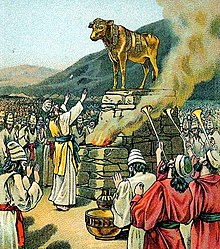
Are You Worshipping A Golden Calf?

Exodus 32 gives us an account that should be chilling to the Christian. Moses has gone up to Mt. Sinai (chapter 24-31) to receive the Torah from Adonai. He remained on the mountain for 40 days and 40 nights. While on the mountain, Moses charged Aaron and Hur with handling the affairs and questions of the people.

In Moses’ absence, the people began to grow impatient. They began to murmur. Likely, they believed he had died on the mountain. But they knew he had been in the presence of Adonai, for at the beginning of the ascent, the mountain had been veiled in smoke for 7 days, out of which Adonai spoke to Moses. This was not dissimilar to Exodus 19 when Moses had earlier ascended the same mountain, was enveloped in smoke, and received the Torah, including the 10 Commandments (Chapter 20). But at some point, in this second occurrence, they lost faith that he would return.

And when the people saw that Moses delayed coming down out of the mount, the people gathered themselves together unto Aaron, and said unto him, Up, make us gods, which shall go before us; for as for this Moses, the man that brought us up out of the land of Egypt, we wot not what is become of him.

Exodus 32:1, KJV

Now, some would say forty days is a long time, and anyone would eventually have to give up on his returning and leave him for dead. This may be true in many instances, but a closer look at the text indicates they lost hope much earlier than that. Skipping down to verse 4, we see that Aaron melted down the jewelry of the Hebrews and fashioned it with a graving tool into a sculpture of a calf and the people (presumably the elders) said, “these be thy gods, O Israel, which brought thee up out of the land of Egypt.” I do not know how long it would have taken Aaron to carve a sculpture of gold, but I take the assumption that he was not a skilled sculptor. Perhaps carving sculptures was his job as a slave in Egypt, but notwithstanding, there is nothing that points to this fact in Scripture. Nevertheless, he would not have been likely to carve out a golden calf overnight. This task would likely have taken several days or weeks, depending on the size of the idol. The significance of this is that the people lost faith in Moses, and Adonai, very early in his mission. It is probable, according to this timeline, that the golden calf incident occurred during Moses’ first week on the mountain.

Failures of the Elders

The second significant part of this incident is the failure of the elders. As we see in chapter 24:14, Moses left the elders at the base of the mountain. They were to lead the people in his absence, and the elders would in turn go to Aaron and Hur for weightier matters. When the people began to grow restless, the scripture does not record the elders standing in the gap. Instead, it says “the people,” which we can assume included the elders, went to Aaron and demanded a graven idol. So quickly the Hebrews went from Chapter 24:3 where they declared “all the words which Adonai hath said will we do!” to “up, make us gods!” And the elders did nothing. In fact, they caved to the pressure of the congregation. I am reminded that the Hebrews were only mere weeks outside of leaving a pagan culture where they had been for 430 years. There was a lot of superstition, tradition, and false notions about deities, be they false or the one true God, Adonai. But the elders were their leaders; men of high esteem and pious character who were their judges, patriarchs, and one could say, pastors. But they, too, were steeped in false beliefs that crept in during this time of trial, and rather than stay strong, they buckled, as did Aaron. The one who Adonai was declaring to Moses at that very time to be the first high priest failed in pointing the crowd to the Almighty and instead had the people turn in their jewelry (vanity, pride, originating with the heathen Egyptians) and used it to fashion a graven image in the form of a calf. What’s worse is they then declared (verse 4), “these be thy gods!” In one fell swoop, the Hebrews, led by the newly minted high priest, violated the first 3 commandments. Let’s recap what those are:

I am Adonai your God, who brought you out of the land of Egypt, out of the abode of slavery. ב “You are to have no other gods before me. You are not to make for yourselves a carved image or any kind of representation of anything in heaven above, on the earth beneath or in the water below the shoreline. You are not to bow down to them or serve them; for I, Adonai your God, am a jealous God, punishing the children for the sins of the parents to the third and fourth generation of those who hate me, but displaying grace to the thousandth generation of those who love me and obey my mitzvot. ג“You are not to use lightly the name of Adonai your God, because Adonai will not leave unpunished someone who uses his name lightly.

Exodus 20:2-7, Complete Jewish Bible

Notice the preface to the Commandments is, “I am Adonai your God, who brought you out of the land of Egypt,” yet the Hebrews immediately declare the same of the golden calf. They are violating the commandment to not create a graven image, but in so doing they are calling the same image Adonai, the one who delivered them. This is a violation of the commandment to not use His name in vain (lightly). This is reiterated in verses 5-6,

On seeing this, Aharon built an altar in front of it and proclaimed, “Tomorrow is to be a feast for Adonai.” Early the next morning they got up and offered burnt offerings and presented peace offerings. Afterwards, the people sat down to eat and drink; then they got up to indulge in revelry.

Exodus 32:5-6, CJB

So Aaron then built an altar, declared the next day to be a feast to Adonai, and then the people brought offerings (as commanded previously in Torah) to Him. In essence, they violated Torah, called the violation an iteration of Adonai, then sacrificed to the violation and worshipped it, all while calling it the image of Adonai. How discombobulated can you be?

We are no better than the Hebrews

Lest you grow unjustly critical of the Hebrews, let me point out that modern Christians are guilty of the exact same sins.

If I had a dollar for every time I’ve heard someone say, “my God would never…” or “Jesus would never…” I would be significantly better off financially. Or on the other hand, many people attribute doctrine or happenstance to the will or word of Adonai. “God told me,” or, “I believe,” are no substitute for what His actual Word says. What about when we take the Word to justify our sin or false belief? Just as the Hebrews took the word of Adonai and applied it to the idol, so are we often guilty of taking the Word and using it to fuel our heart’s depiction of Him.

Believer, you have been chosen by God and called out of your Egypt. You have been saved from the sins of the heathen, but do not use this as an opportunity to bring those sins with you and call them holy! Your traditions and previous beliefs are a weight you need to shed. They should have been cast off in the sea when you passed through unto a new life, but we all bring something with us. The time to cast them away is now.  This is not to say that everything from the past is unfit for a follower of Adonai. The Hebrews had been commanded by Adonai to receive jewelry, riches, and clothing from their Egyptian neighbors when they left their captivity. He meant to use the riches of the heathen for a new purpose: to fashion the basins, ark, candlesticks, and other furniture in the tabernacle that was to come. The talents, passions, and faith that we bring from our old life can be used for His glory, but that is for Him to do a work within us and not for us to use to define who He is in our own deceitful hearts.

The heart is deceitful above all things, and desperately wicked: who can know it?

Jeremiah 17:9, KJV

Elders beware!

Preachers, we must be careful that we also do not bring our own traditions and past experiences into our exposition of the Word and Will of God! We are part of “the people” even though we are called to lead and teach them. We are no less susceptible to following our own designs when seeking to worship and follow the Almighty. The danger comes when we break the law of God and encourage others to follow us in so doing. Matthew 5:19 gives us a grave warning:

Whosoever therefore shall break one of these least commandments, and shall teach men so, he shall be called the least in the kingdom of heaven: but whosoever shall do and teach them, the same shall be called great in the kingdom of heaven.

Matthew 5:19, KJV

If using the Lord’s name in vain (as in swearing) is terrible, how much more so is attributing His name to something He never did? Did God really declare righteous what you say is righteous, or are you attributing His name to your opinion or prejudice? Is something you call evil what He would call evil, or are you applying your own experiences or societal norms to a practice or activity? In doing this, is this considered one of the “least commandments,” or is using His name in vain a great commandment?

Furthermore, we must resist the temptation to not speak the truth for fear of the mob. Sometimes it is easy to “take the high road,” and live in silence on a matter to keep the peace or avoid division, but what did Christ do? Along with His declaration that He did not come to abolish the Torah, He also stated that He came to divide.

Suppose ye that I am come to give peace on earth? I tell you, Nay; but rather division:

Luke 12:51, KJV

He obviously did not mean that He was cause for strife and division within the body of believers, but that He would be a cause for division among those who held to the world and those who embraced Him. He also reminded us that we cannot serve two masters (Matthew 6:24, Luke 16:13). Traditions alone are not wrong, but when they dictate how we worship Him, they become a master and we are slaves to our past. In this case, we must cast off Egypt and worship Adonai, free from the bondage of our traditions. And we cannot allow the opinions and traditions of others to cause us to disregard this requirement. We will not stand guiltless if we teach people to disregard any portion of God’s word because it is outdated, not applicable, or if we conflate His word with our tradition. How sobering is this reminder!

I come in love, not condemnation

As usual, I do not bring this word as a condemnation, but a plea. Many in our churches are in bondage, not to gross wickedness or unrighteousness, but in adherence to false attributions to God. If God says it, do it! If He says not to, don’t do it! Sola scriptura is not only for the reformers; indeed, all Christians should lean not on their (or a teacher’s) own understanding, but on the Scriptures alone. How many have fallen away from the Truth because they were taught a truth that was false? How many have worshipped a graven image that they were told was Adonai? How many times have we been instructed, or instructed others, to follow such and such a belief that was contrary to the true Word of God?

Christian, whether you are “the people” or “the elders,” please remember this account of the golden calf and ask in prayer, “am I following a golden calf of my own design or the Adonai of the mountain?”

Featured

Keep My Commandments

To listen to this podcast episode click Keep My Commandments

Lately, I have been asked by numerous people why I choose to “put myself in bondage” by following Torah. By this, these people mean to say that we are freed from the Torah (law) because of the death, burial, and resurrection of the Messiah, Yeshua. Through this series of events, we no longer are bound by the Torah in which we are commanded to abstain from unclean meats, to observe Shabbat, to celebrate the Feasts and to not wear clothing that is mixed linen and wool. However, many of these same people will correctly say that we are bound by other parts of Torah: honoring your parents, worshipping only Elohiym, giving tithes, no lying, stealing, or committing adultery. By their own logic, then, they are still half-bound by Torah. In talking to people who believe this way, a group that I was a part of until the recent past, I have found that the lines are usually drawn on cultural and traditional boundaries. Here in the South, we love catfish and bacon, BBQ and shrimp, squirrel, and crawfish along with college football, country music, and soap operas. According to some, we can enjoy these things because we have freedom in Christ. My question is, however, are we using justification by faith as a justification for our lawlessness? Climb aboard, and let’s ride this train together.

Believest thou not that I am in the Father, and the Father in me? The words that I speak unto you I speak not of myself: but the Father that dwelleth in me, he doeth the works. Believe me that I am in the Father, and the Father in me; or else believe me for the very works’ sake. Verily, verily, I say unto you, He that believeth on me, the works that I do shall he do also and greater works than these shall he do; because I go unto my Father…If ye love me, keep my commandments…he that hath my commandments, and keepeth them, he it is that loveth me: and he that loveth me shall be loved of my Father; and I will love him and will manifest myself to him. – John 14:10-12, 15, 21

There are two things that must be established before any further discussion can occur. The first is that Yeshua and the Father (Elohiym) are one and the same. We see this in the passage we just read as well as John 10:30 among many other places (it must be noted here that Yeshua’s statement in John 10:30 where He said, “I and my Father are one,” so enraged the Jews that they tried to kill Him on the spot). Secondly, we need to agree that God never changes. James 1:17 says Every good gift and every perfect gift is from above, and cometh down from the Father of lights, with whom is no variableness, neither shadow of turning.” There are many more places in Scripture that drive home the point that Yeshua is Yahweh, with whom there is no changing. He turns the hearts and minds of men as He will, and His methods will vary by circumstance and individual, but all His deeds and words are the same from everlasting to everlasting. If you disagree with me here, there is no point in going further. You must have this foundation to proceed. Now that we have the previous two foundations laid, we can go into why I made the decision to observe and follow the Torah as a 21st century Baptist, of pure European lineage, living in the Southern United States. It shouldn’t be that surprising considering this is known as the “Bible belt,” but fellow Bible belters are who are misunderstanding this, so this is dedicated to you. 

What are the Law and Commandments?

In our opening passage, Yeshua says 2 profound statements, followed by a promise. 1) He identifies Himself as Yahweh, the God of Abraham, Isaac, and Israel. 2) He says if we love Him, we should keep His commandments. 3) If we love Him, the Father will love us and will manifest Himself to us. Having already established that Yeshua is Yahweh, we now turn our attention to the second statement: “If ye love me, keep my commandments.” Because the King James Version of the New Testament that I use was translated from the Greek, I looked up the meaning of the word “commandment” in the Greek from whence it was translated. The original word was ἐντολή (entole) which means an authoritative prescription or precept. The connotation is one of a parent who administers their child a medication that was prescribed from the physician. The medicine may be bitter and unpleasant, or perhaps it is smooth and sweet tasting, but the parent’s authority in compelling the child to take the medication is not dissimilar to the meaning of the word “commandment.” The parent commands the child to open and take the medicine for their own benefit, just as Yahweh commands us with authority to follow His precepts. The Hebrew counterpart to this thought is the word מִצְוָה (mitsvah) which means ordinance or precept. So, the idea here is that God’s commandments are precepts, ordinances, and mandated prescriptions. But prescriptions for what? 

Sin is the disease. The commandments are the medicine. But the healing comes from the Great Physician, Yehovah-Rapha. Our faith in Him produces the cure as we read in Galatians 2:16

Knowing that a man is not justified by the works of the law, but by the faith of Jesus Christ, even we have believed in Jesus Christ, that we might be justified by the faith of Christ, and not by the works of the law: for by the works of the law shall no flesh be justified

So, the keeping of the Torah will not and cannot justify us in the sight of Yahweh, for they are works. It is faith alone in the Messiah that redeems us from the curse of sin. Look also at Galatians 3:24

Wherefore the law was our schoolmaster to bring us unto Christ, that we might be justified by faith

Torah brings us to the Messiah and points Him out to us. It did so for Shem, and Abraham, and Moses, and Joshua, and David, and Daniel just as it did for Justin Martyr, and Calvin, and Spurgeon, and Tyndale, and Wycliffe, and all other believers. Torah has a two-fold application: by showing us what the Father expects of us, it reveals our depravity and inability to live up to it, thus our desperate need for redemption. However, once we are redeemed, it is how we are sanctified and obey the will of Yahweh. Therefore, Yeshua said, “If ye love me, keep my commandments.” His commandments-the precepts, prescription, and principles-are to be followed to prove our love for Him. And because Yeshua is Yahweh, His commandments reach from Genesis to Revelation. And because He does not change, He wants us to obey ALL His commandments, from Genesis to Revelation. 

The next word we look at is “law.” Found all throughout Scripture, the word often produces negative connotations to us. We see the law as a hard taskmaster, demanding more from us that we can possibly give, just as the Egyptian pharaoh demanded a bigger quota with fewer materials from the Hebrews before the exodus. However, when looking at the word at its original source, it takes on a much softer meaning. Before we find the definition, let’s read a few verses that contain the word.

And Yehovah said unto Moses, how long refuse ye to keep my commandments and my laws? Exodus 16:28

This book of the law shall not depart out of thy mouth; but thou shalt meditate therein day and night, that thou mayest observe to do according to all that is written therein: for then thou shalt make thy way prosperous, and then thou shalt have good success. Joshua 1:8

Hold up here for just a second. Read that last verse again. Joshua says we are to mediate on the Law, and to do ALL that is written therein and in return our way will be prosperous and have good success. This same verse has been put to music and taught to hundreds, perhaps thousands of youths at Baptist church camps and rallies for who knows how many years (I learned it 20 years ago) by some of the same people who don’t follow the Law and teach that it does not matter to us anymore. That is disturbing to me. Just as disturbing is there is another children’s song that is taught to our little kids by people who deny what the song rightfully says. “Father Abraham had many sons, and many sons had Father Abraham, and I am one of them, and so are you…”. So, the same people who say we are not bound by the Law because we are not Jewish, but have faith in Jesus who redeemed us from the Law also teach our kids that we are children of Abraham. Therefore, whether they realize it or not, this is an admission that we are part of the Abrahamic Covenant, grafted in by adoption. The latter is true, in that we ARE part of Abraham’s seed once we are justified by faith. As a result, we are obligated to keep the commandments and precepts that were given for him and us to keep as a part of the covenant.

A few more verses speaking of the law:

Blessed is the man that walketh not in the counsel of the ungodly, nor standeth in the way of sinners, nor sitteth in the seat of the scornful. But his delight is in the law of Yehovah; and in his law doeth he meditate day and night. Psalm 1:1-2

There it is again: meditate on the law day and night.

O how I love thy law! It is my meditation all the day,” Psalm 119:97

So, what is this law that God chided Moses for disobeying and that Joshua and David fondly speak of meditating on constantly? It is the Hebrew תּוֹרָה (torah) and it means “precept or statute.” Torah, mitsvah, entole: precept, commandment, ordinance, prescription. They are spoken of with affection by those who obey it and with contempt by those who do not. Yeshua said if we love him, we will keep His precepts, which are from everlasting to everlasting. Is that not reason enough?

Besides the opening passage from John, what else did Yeshua Himself have to say about the law? Surely, He has the authority to announce that the Law is abolished. We find our answer in Matthew 5:17-19

Think not that I am come to destroy the law {torah}, or the prophets: I am not come to destroy, but to fulfill. For verily I say unto you, till heaven and earth pass, one jot or one tittle shall in no wise pass from the law {torah}, till all be fulfilled. Whosever therefore shall break one of these least commandments {entole}, and shall teach men so, he shall be called the least in the kingdom of heaven; but whosoever shall do and teach them, the same shall be called great in the kingdom of heaven.

In His first major sermon, the above passage immediately follows the Beatitudes. He delivers all the apparent paradoxical statements; Blessed are the…, and then follows that with saying He did not come to destroy or abolish Torah, but to fulfill it. Does fulfill mean that He kept the law so the rest of us don’t have to? No, not at all! To fulfill the law means that he satisfied the penalty associated with breaking the law. We know this by seeing what the original meaning of the word “fulfill” is, but Yeshua Himself clarified this immediately afterward. He says not one jot or tittle shall pass from the law until ALL be fulfilled at the passing of heaven and earth. Basically, neither the dotting of an “i” nor the crossing of a “t” will go away until the earth does. And last I checked the earth still exists. A quick example of the fulfillment of the Law is this. When you incur a speeding ticket and you pay the judge, did you abolish the law or fulfill the Law? Or better yet, when you do not speed at all, thus not requiring a speeding ticket, are you destroying the Law, or fulfilling it? Yeshua said He came to fulfill the Law; He fulfilled it because we cannot, not fully, not every time, and not sufficiently. Also consider this: one day, we will stand before Yahweh at the bemah seat to give an account. The Scripture says if we transgress one portion of the Law, we are guilty of breaking all of it. So, when the Father has us answer for our ways, I believe He will ask first, is this man guilty of breaking the law? It doesn’t really matter how many laws we’ve broken, or the magnitude of them. One is sufficient to damn us. But Yeshua the Son will step up and declare that He has fulfilled the Law despite our inability. At this point Yahweh will turn to us and ask us what did we do with this newfound redemption? And then we will have to answer for our stewardship of His gifts and precepts.

Yeshua then goes on to verse 19, which is often overlooked by many; He declares that anyone who teaches us that even the LEAST of the commandments is null will be called least in the kingdom. Notice He doesn’t say they won’t be in the kingdom, further proof that this is not a matter of salvation. But He does say they will be least. Their rewards will be few. If obeying out of love isn’t enough, how about coming in last place? Is that enough to motivate you to obey the Torah? What is the least of all the commandments of the Law? Is it keeping Shabbat, consuming unclean meats, or something else? I will leave that up to you to decide. Whatever you determine to be the least of them all, Yeshua said if you teach others that it is of no consequence, then you will be considered the least in the Kingdom. I don’t have any aspirations to be the greatest one in Heaven, but I would not want to disobey any commandments of the Father and do not want to be known as the least. He is the propitiation for my sins; my only hope is to hear “well done, good and faithful servant; thou hast been faithful over a few things, I will make thee rule over many things: enter thou into the joy of thy Lord” (Matthew 25:23)

As an aside, the closest Yeshua ever came to overriding Torah was to make the law stiffer, and not laxer. Consider Matthew 5:21:22; 27-28

Ye have heard that it was said by them of old time, thou shalt not kill; and whosever shall kill shall be in danger of the judgment: but I say unto you, that whosever is angry with his brother without a cause shall be in danger of the judgement: and whosever shall say to his brother, Raca, shall be in danger of the council: but whosever shall say, thou fool, shall be in danger of hell fire…ye have heard that It was said by them of old time, thou shalt not commit adultery: but I say unto you, that whosever looketh on a woman to lust after her hath committed adultery with her already in his heart.

So far, we’ve looked at 1) Yeshua is Yahweh, and as thus, He spoke the world into existence, gave torah to Moses (and wrote it on the hearts and probably spoke it to the God-fearing men before him). Therefore, when He said, “keep my commandments,” He was referring to all the law given since the beginning of time. 2) If we love Him, we will obey Him. If we don’t obey Him, we are not showing our love. It is a sad situation when a redeemed spirit cannot love it’s Redeemer enough to obey even in the least of things. 3) This brings us back to John 14:21. Yeshua says if we keep His commandments and love Him, the Father will love us. We know Yahweh already loved us as His creation in need of redeeming, and we see two examples of this in John 3:16 and Romans 5:8. He loved us WHILE WE WERE YET SINNERS! But when we are redeemed by His son’s blood, His love for us deepens, and when we keep His commandments out of love for His son, we reach an unprecedented level of affection in the Father’s eyes. His love for us does not diminish when we disobey, but His blessings will, for He heaps His blessings upon us when we show ourselves faithful through our obedience and love for Him.

The entire premise of keeping Torah is loving Yahweh enough to keep His law. We do not fear the law – or the consequences of breaking it – because Yeshua took that upon Himself as the final sacrifice on the cross, but by His own words, He did not do away with the Law. He did not strike the laws from the books, or even the penalty of the law; He instead fulfilled the Law’s demand for justice. He is the propitiation – an atoning victim – for our sins (Romans 3:23, I John 2:2, 4:10). 

Objections to Torah

One of the common objections I get from people who challenge my position that Torah still stands today is they point to Deuteronomy 21:18-21 and ask if I still believe this portion of the law applies today:

If a man have a stubborn and rebellious son, which will not obey the voice of his father, or the voice of his mother, and that, when they have chastened him, will not hearken unto them: then shall his father and his mother lay ho on him, and bring him out unto the elders of his city, and unto the gate of his place; and they shall say unto the elders of his city, This our son is stubborn and rebellious, and he will not obey our voice; he is a glutton and a drunkard. And all the men of his city shall stone him with stones, that he die: so shalt thou put evil away from among you; and all Israel shall hear, and fear.

First, this is not a case of little Johnny having a moment of rebellious defiance over eating broccoli at dinner. Neither is this a teenager struggling with a rebellious streak. Notice he is a “glutton and a drunkard.” Not only does this suggest that he is a grown, but unmarried son, but it also shows that there is a clear pattern of this behavior that the son is not correcting, even to the exasperation of his parents. He, as an adult heir to the family name, is dragging it through the mud and dishonoring his parents (violation of the 4th commandment). Yahweh, through Moses, established the penalty of dishonoring one’s parents to be death, because as we know from 1 Samuel 15:23, rebellion is as the sin of witchcraft, and “thou shalt not suffer a witch to live” (Exodus 22:18). HOWEVER, just as Yeshua paid our penalty for the sin of breaking Shabbat (“for the wages of sin is death”), He fulfilled the penalty for rebellion and dishonoring our parents. It is still a sin to break Shabbat just as it is still a sin to dishonor our parents, but He paid the sin debt for both. HalleluYah!

Another misconception is the clean vs. unclean meats question. Many say this law was abolished on the cross, but more vividly when Yahweh told Peter “what God hath cleansed, that call not thou common” (Acts 10:15) and when Paul said “let no man therefore judge you in meat, or in drink…” (Colossians 2:16) For the sake of time and space, I will address this topic alone in a separate study, but I must simply say those two passages and similar ones are grossly misinterpreted. Peter’s vision and Paul’s instruction simply do NOT nullify Yahweh’s commandments that predate Noah to abstain from unclean meats. Briefly, the vision of the sheet being lowered and full of all kinds of animals was a visual representation of all of humanity: some are the dregs of society, some are disgusting, some are simply barbaric while others are proper, respectable, and morally or physically clean people, but all are worthy of the redemption of Messiah. While Torah and the Abrahamic Covenant was given to the Hebrew people for safeguarding and cherishing, Yahweh was now telling Peter it is acceptable for all people to receive it, and how will they receive it unless he takes it to them? THAT is what the vision represented.

Conclusion

Revelations is the undisputed, well, revelation of the end times for humanity on earth. It was given by Yahweh to the Apostle John in a vision on the island of Patmos. Here, John was serving a life sentence of exile as punishment for preaching the message of Yeshua. As the last surviving member of the Twelve and even outliving Paul by at least 3 decades, he was the last person on earth to receive a message from Yahweh that would be canonized into Scripture. Revelations chapter twelve gives an account of the dragon (Satan) being at war with the woman (the Abrahamic Covenant) and her seed (Yeshua and those who abide in faith in Him). The entire chapter is worth reading in this context, but verse seventeen is what I will read here:

And the dragon was wroth with the woman, and went to make war with the remnant of her seed, which keep the commandments of Yahweh and have the testimony of Yeshua Messiah

Satan is not at war with the physical seed of Abraham. He hates the remnant that keep the commandments of Yahweh and have the testimony of Yeshua Messiah. It isn’t those who claim to follow Christ, who will one day say “Lord, Lord, have we not done many wonderful works in thy name?” that he is after. The remnant is those who keep His commandments and have the testimony (give evidence) of Yeshua Messiah. These are the same people of whom Yeshua said “if you love me, keep my commandments” and who “will be loved by the Father” if we love Him. 

As I close, I want to be clear on something. I am NOT saying that those who disagree with me are condemned to Hell. I may be completely wrong in my conclusion of what the Bible says about keeping the commandments of old. However, I would rather err on the side of obedience than disobedience. However, I do believe there are millions of people who love Christ and are justified by faith but are wrong or unaware on the issue of keeping Torah, and I don’t think they will be refused eternal life because they are ignorant on this, but they will be judged according to how they obeyed the Father. You see, the word of God is everlasting to everlasting; before Moses, there was a distinction between clean and unclean animals and practices. Before Mt. Sinai, there was a proper way to sacrifice. Prior to the 10 Commandments, there was the seventh day Shabbat. Before the Apostolic era, there was a commandment to tithe. And so forth. Yahweh does not change.

Yeshua Messiah the same yesterday, and to day, and for ever. Hebrews 13:8