Backpedal

For a long time, I’ve treated this blog (and Facebook) more as a journal than a social media platform. I’ve bared it all on more than one occasion and received a fair share of questions and criticism, as well as plenty of affirmation and attaboys also. This is not a good thing, because in doing so, I’ve made myself look stupid a few times. This, in turn, hurts my credibility and worse, sometimes the name of my Father. This is my recanting of something I’ve said. 

Over the past couple of years, I have begun to study the Scriptures in a way I never had before. I have grown weary and discouraged by “churchianity,” a term I use to describe following the crowd in serving tradition in the name of Christ. Mind this, it is different than a cult or false religion in that many Christians follow Christ in the only way they know how, and thus worship the Messiah, albeit in the framework of tradition. Churchianity values mode and method, pomp and program, and music and money over deep teaching of the Scriptures. I’m not indicting all churches, but most. And part of that I understand: tradition provides familiarity, continuity, and order to the service and that serves to prevent chaos. However, it also can prevent deeper understanding of Scriptures. Getting locked into a belief system because someone misinterpreted a passage 141 years ago, but it made sense to people who never dug deeper, and now it’s been regurgitated a million times until it is church creed or doctrine, who is going to question it?

I digress on that point, because this is about me. 

In my search to better understand the Scriptures and thus be more pleasing to my Adonai, I made an error. I found many passages in both “Old” and “New” Testaments that revealed shortcomings in churchianity. However, my desire to be consistent led me to also conclude that all of the Scripture was intended for all men in all eras. One example is the dietary commandments in Leviticus. To be clear, Elohim declared pork flesh to be an abomination, and He never clearly rescinded that statement. However, it appears that all of those who emphatically chided me were partially correct in that it was a restriction for the Hebrews only, of which company I am not. The argument can still be made that we are the spiritual descendants of Abraham, thus still subject to what he was, but this is one of the side issues that is dividing people and causing them to fall out of fellowship with other believers. So let me say this: through more learning and council, I have slightly changed my position in that I still don’t eat pork because it’s a disgusting animal that Elohim doesn’t want us to eat, but it is not a COMMANDMENT for anyone living post-70 CE. 

The Sabbath day is another position I have argued strongly for. Although I do believe Elohim, the Almighty creator and Adonai of the Earth desires us to rest and set aside time to worship Him, He is not concerned with the name or position of the day itself. I am reserving this space to say I very well may be wrong here. Keeping the Sabbath is echoed over and over and over throughout the entire canon so I don’t believe it’s a non-issue, but I know He is more concerned with the “thoughts and intents of the heart (Hebrews 4:12). However, if this be true, Sunday is no more special than Saturday (Sabbath). It is simply the day we TRADITIONALLY set aside for worship. Note there is far more Scriptural precedent for Sabbath than Sunday.

I’ve said all this for one reason: I do not want to be, or perceived to be, a hypocrite. Worse, I don’t want to be inconsistent with Scripture. If I’ve said or done something in error, I hope to be able to always admit just as publicly as I did when I said or did it. 

As I continue to search and study as the Bereans (Acts 17:11), I do plan to post my studies, but not before I have fully researched them. And as always, I will be willing to stand corrected if I am found to be in error.

Grafted Into the Hebrew Root

All Scripture quotations are from the King James Version unless stated otherwise.

When I first began my journey into becoming Torah pursuant, I had never heard the term, Hebrew Roots, or the growing movement that uses that name (and as a point of clarification, I do not identify or associate with the Hebrew Roots movement). However, as I’ve plodded along The Way in seeking the will of Adonai regarding this change of focus, I learned the term carries with it a host of mixed ideas and connotations, and they range widely from odd but sincere to weird and harmful. Interestingly enough, so do the mainstream Christian denominations and sects. I should know, as I’ve grown up amongst them for the past 30 years. But this is not about them, per se, so I digress.

I do not identify or associate with the Hebrew Roots movement

I have heard from many Christians who boast (although they would argue against that term) that we are not bound by the Torah or Covenants because those were Jewish things and Jesus did away with those because of their unbelief. Furthermore, “I ain’t Jewish; I’m [insert anything except Jewish] so I’m free to do and eat whatever I want!” These people are severely lacking in one key factor: all believers have Hebrew roots.

The purpose of this study is not to delve in the Hebrew Roots Movement, but into the doctrine of Hebrew roots (lowercase “r”). For this purpose, we will be chiefly in Romans 11. The key verse that triggered this discussion between the Holy Spirit and I was verse seventeen.

And if some of the branches be broken off, and thou, being a wild olive tree, wert grafted in among them, and with them partakest of the root and fatness of the olive tree;

Hebrews 11:17

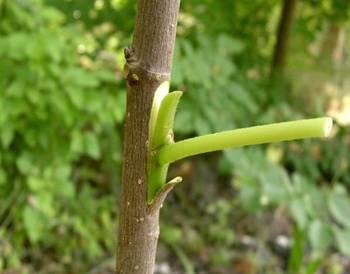
The process of grafting is quite fascinating. There are many methods, but for those unfamiliar, a person can cut off a branch of a tree, let’s say, an orange. At the severed end, a notch is cut in the wound. Then one takes a branch from another tree of a different variety and sharpens the end of the branch into a wedge. This end is then inserted into the notch of the first branch. The two joined branches are then bound tightly, usually with plastic wrap or some other tight seal and then left alone. Over time, nourished by the healthy root, the wound begins to heal and eventually the grafted-in branch becomes part of the main tree. If you chose a lemon branch, it will one day produce lemons although it’s host and nutrient supply is an orange tree. In reality, the lemon branch is just as much part of the orange tree as the orange branches. If the root dies, the branch dies with it. If it flourishes, so do the fruits. This is one of the ways man has learned to manipulate nature that is quite captivating to me. This interesting video shows this technique.

In Romans 11, Paul is using the method of grafting to describe what is taking place in his current time as well as in ours. He is writing to believers in Rome (c. 1, v. 7) and giving instruction and doctrine. Although some were Jews who believed (such as he was), many were Gentile believers. In fact, he explicitly states who he is writing to in our current chapter.

For I speak to you Gentiles, inasmuch as I am the apostle of the Gentiles, I magnify mine office:

Romans 11:13

To recap where we are; Romans is written to mostly Gentile believers living in Rome. This letter to them describes how they are considered to be grafted in as a wild olive branch into a cultivated olive tree. In short, Hebrews are pictured as the native, or cultivated olives and Gentiles (all non-Hebrews) are the wild, non-domesticated olives.

Going back to our opening verse, Adonai cut off the branches of the olive tree, but why? Why did he sever the limbs of the chosen domestic tree and graft in the wild ones?

Well; because of unbelief they were broken off, and thou standest by faith. Be not highminded, but fear: For if God spared not the natural branches, take heed lest he also spare not thee.

V. 21-22

The branches – the Hebrew people – were broken off because of their unbelief. Their sin was not unbelief in Adonai, for they followed His Torah and knew who He is. Nay, their unbelief was in the Messiah. So in their place Adonai grafted in the wild olive, the wayward and feral nations who had before then never known the power and person of Yahweh.

Consider this: the only thing that separated the Hebrews from the Gentiles was the Torah. Torah (the law, the word of Elohim) existed before Moses, but was codified on Mt. Sinai and with it was a covenant promise. His promise and calling is without end (v. 29).

But the counsel of Adonai stands forever, his heart’s plans are for all generations.

Psalm 33:11, Complete Jewish Bible

We’ve already drawn the conclusion that every nation is pictured as an olive branch. The differentiation is between natural or wild. So we’re all olives. Ok. If Gentiles are wild, then the root of the wild tree could be deduced to non-adherence to Torah, since Torah is what set the Hebrews apart. Therefore, if the Hebrews are the branches of the natural olive tree, what is the root? You guessed it; Torah!

Some will argue that God, and not His law, is the root. That’s fine if one wants to argue that position. I insist that God and the Word of God are One. Isaiah made it clear that Messiah is the Branch, and John made it abundantly clear that Messiah is the Word.

In the beginning was the Word, and the Word was with God, and the Word was God. And the Word was made flesh, and dwelt among us, (and we beheld his glory, the glory as of the only begotten of the Father,) full of grace and truth.

John 1:1, 14

But a branch will emerge from the trunk of Yishai (Jesse), a shoot will grow from his roots. On that day the root of Yishai, which stands as a banner for the peoples – the Goyim (Gentiles) will seek him out, and the place where he rests will be glorious.

Isaiah 11:1, 10, CJB

The majority of Isaiah chapter eleven is a prophesy pertaining to the millennial reign of Jesus, but it’s very clear in the two passages above that it is a Messianic prophesy. Yeshua (Jesus) is the Word (John 1:1) and the Shoot (Branch) (Isaiah 11:1).

The Branch in Isaiah came out of the stem of Jesse. The stem came from the root. It is a picture of a lineal ancestry. We know that Jesus was a direct descendant of Jesse through his son, David. Jesse, like most Hebrews, was a descendant of Abraham. The Abrahamic Covenant, along with the Adamic, Noahic, and Mosaic Covenants, is part of the root of the natural olive. These were the foundations of the Hebrew people’s culture, identity, and religion. When Adonai gave Moses the Torah (instructions) on Mt. Sinai, He was giving the branches the instructions on how to fulfill the Will of the Root.

Furthermore, Jesus Himself said He was the true vine.

I am the true vine, and my Father is the husbandman. Every branch in me that beareth not fruit he taketh away: and every branch that beareth fruit, he purgeth it, that it may bring forth more fruit.

John 15:1-2

Bringing it all back home to Romans 11, I remind the reader that the branches that were broken off were the Hebrews who did not believe that Yeshua was the Branch from Jesse. These are the ones who did not bear fruit because while they were rooted in Torah and the words of Adonai, they did not believe them from the roots up. The Jews did not recognize the true Vine, the one who bridged the gap between root and branch. So they rejected the vine.

The husbandman, The Father, did not pluck up the Hebrew root.

Any arborist, horticulturalist, and gardener knows if a branch of a plant is diseased or not producing, they must remove it in order to make room for the productive and healthy branches that will produce fruit. In the example of the olive trees in Romans 11, the branches that were dead or unproductive were removed to make room for a new strain of olive. The wild olive was cut away from its root and grafted into the natural olive’s root. It’s identity, sustenance, and growth now comes from drawing from its new, adopted root. The natural olive didn’t change at all, except to accept the grafted-in wild olive. Furthermore, the other olive branches have no say in the matter, for it is the husbandman, or gardener, who makes the cuts and modifications.

I don’t know if there could be any clearer picture of the adoption of Gentile into the Hebrew. The main root – the Covenants and Torah – has not changed. The husbandman, The Father, did not pluck up the Hebrew root. Nay, He simply pruned away the unfruitful, unbelieving Jews and left a remnant of those who believed. He then grafted, and continues to today, the Gentiles, who were the wild olives; sincere but pagan. These believing Gentiles then receive all the blessings of the Covenants, including salvation. Is their salvation in the root? No, not per se, for their salvation is in believing in the Vine, Jesus the Messiah. We Gentiles may not have a direct ancestry to Jesse (or Abraham), but we enjoy the blessings of the Vine because we are grafted into the Covenants through the grace of the Gardener.

How can we accept the Vine but reject the Root? Is that even possible? Paul has a warning for us Gentile branches that we would do well to pay attention to.

Boast not against the branches. But if thou boast, thou bearest not the root, but the root thee. Thou wilt say then, The branches were broken off, that I might be grafted in.  Well; because of unbelief they were broken off, and thou standest by faith. Be not highminded, but fear:  For if God spared not the natural branches, take heed lest he also spare not thee.

Romans 11:18-21

We should not let pride cause us to boast against the ethnic Jews, for we are just as susceptible to being pruned away. We were plucked from our pagan, unbelieving cultures (albeit several thousand years removed, for some) and grafted into the cultivated Hebrew root, not because of our own merits or superiority, but because the Father, Adonai, will not let His Word return void (Isaiah 55:11). His root is eternal, and He desires that we enjoy the fruits of it alongside, and equal to, the original branches that also believe. Shalom!

For there is no difference between the Jew  and the Greek: for the same Lord over all is rich unto all that call upon him.

Romans 10:12

Is Wine An Abomination to Jehovah?

Having grown up in a very conservative Baptist home, I have always known that drinking alcohol was a sin, although I do not recall it being an oft-spoken topic in the home. In church however, it seems like it was a quite common topic among youth leaders and preachers. Many would declare, even with boasting, that alcohol has never touched their lips and for those who have sampled the devil’s brew, much repentance is needed. When faced with questioning such as, “didn’t Jesus turn the water into wine?” the standard response was usually something like, “That ‘wine’ was actually just grape juice because Jesus would never make something that would make someone drunk.” Alternatively, I have heard, “In order to ferment wine, you must use yeast, and yeast (leaven) in the Bible is a picture of sin. Therefore, Jesus would never have done that.” I suppose this also means Jesus would have only eaten unleavened bread at all meals.


I understand preachers and youth leaders are usually operating with one goal, and that is to teach and instruct and shepherd their flocks in the Way of the Master, teaching them to observe all things whatsoever He has commanded. For that cause, I am grateful and give them much honor and respect. However, I also came to realize, as all mature followers of Jesus should, they too are human and subject to teaching their opinions rather than the pure word of Adonai. This goes for all men, including myself. That is why when teaching the Bible, I try extremely hard to leave my opinions-my own understanding-at the door and only say what the Bible and the Holy Spirit give me. My mission is to have a deeper and more perfect understanding of the Father and His Word. That mission is what led me to find out for myself what the Bible says about the consumption of alcohol. What follows is my understanding from the Scriptures using the aid of Strong’s Exhaustive Concordance of the Bible. If I interject my opinion, I will say so. As a non-drinker, my purpose of this study is not to justify my guilt in drinking, nor is it to prove a point about abstinence of alcohol; it is simply to “study to show thyself approved.”


The word “wine” is found in the King James Version 233 times, translated from 10 distinct Hebrew words and 4 Greek words.

  • H3196 yayin: fermented, effervesce, intoxication
  • H8492 tiyrosh: freshly squeezed, not fermented; often translated as “new wine”
  • H7941 shekar: intensely alcoholic, strong wine/liquor
  • H3342 yeqeb: vat, trough for catching squeezed juice; “wine vat.” Only occurs in Deut. 16:13
  • H2562 chamar: Chaldean word, to boil up; hence to ferment
  • H1660 gath: a winepress or vat for hold the grapes in pressing them. Only occurs in Neh. 13:15
  • H4469 mamcak: wine mixed with water or spices; often translated as “mixed wine” or “drink offering.”
  • H5435 cobe: to become tipsy with alcohol; drunkard; carousal
  • H6071 aciyc: freshly-squeezed or trampled grapes
  • H6025 enab: a ripe fruit; grape
  • G23631 oinos: a direct correlation to the Heb. 3196 meaning fermented grape juice
  • G1098 gleukos: from which “glucose” derives; “sweet wine:” highly inebriating
  • G3943 paroinos: staying near wine; given to wine
  • G3632 oinophlugia: an overflow of wine; drunkenness; excess of wine

For the purpose of this study, I did not include the times “winebibber” or other variants were used because in every instance that those occur it is speaking of drunkenness, so no further clarification is needed. The word wine is translated from the Hebrew yayin 147 times. In perspective, this leaves 86 instances for the rest of the 13 variants of the word wine.Interestingly, the Hebrew texts only use two words that describe freshly squeezed, non- fermented wine: aciyc (4 occurrences) and tiyrosh (35 occurrences). In both instances, the word is referring to the fruit of the vine in its natural state immediately after being squeezed out of a grape.

First mentions…

Wine is first mentioned in Genesis chapter 9 where we see Noah getting drunk sometime following the Flood. He got drunk and fell asleep naked inside his own tent. It was here, inside his own domicile, that he was discovered by his son Ham, who then ridiculed his father rather than cover him up and mind his own business while respecting his father. For this act, Noah placed a curse on his grandson, Canaan. The rest of the story is for another time. In this reference, the word used for “wine” in verses 21 and 24 is the Hebrew word yayin which means to effervesce or ferment and is often used in reference to banqueting. One could rightly conclude this was brought out to be used in times of celebration or joyous occasions. However, this is the same Hebrew word that is used in familiar passages where men got drunk and made poor decisions: Genesis 19 (Lot/Daughters), Esther 1:10 (Ahasuerus), Proverbs 20:1 (is a mocker). This word is the root for “winebibber,” i.e., one who is drunk with wine.

Most Notable Mention

“And Melchizedek king of Salem brought forth bread and yayin (wine): and he was the priest of El Elyon (the Most High God).”

Genesis 14:18

There has been much discussion over who Melchizedek was. On the surface, at the very He is mentioned as “the priest of El Elyon.” I am sure no one can say definitively, but I believe he was the pre-incarnate Yeshua (Jesus). Briefly, I wish to explain why I believe this. First, we look at his name. The Hebrew transliteration is Malki-Tzedek meaning “King of Righteousness.” The prophet Jeremiah calls God Adonai Tzidkeinu which is translated in the English as “the Lord our Righteousness (Jer. 23:6; 33:16).” No one except He is worthy to be called Righteousness. Furthermore, Melchizedek is titled “king of Salem (Jerusalem),” and we know Jesus is the “king of the Jews” and will one day rule Jerusalem again. To top it off, Abram gave Him a tithe (tenth) of all his possessions. Elsewhere in Scripture where we are commanded to give a tithe, it is always given to the Lord, Jehovah. Thus, I do not see how Melchizedek can be any other than Jesus, the son of Jehovah.

Why did I spend a paragraph touching on the tip of the subject of Melchizedek? I did so because here and in the Gospel according to John 2:1-10 we see Jesus handling and giving fermented wine-yayin-to others as a blessing. I will repeat, both Malki-Tzedek in the only time we see Him and Jesus, in His first public miracle, give fermented wine, not grape juice, to God-fearing Hebrews as a blessing. Let us go further. (the Greek equivalent of yayin is oinos and is the most used form of “wine” in the Messianic writings, occurring 32 times.)

Give an Offering of Wine

In the Torah, there are many instances where Jehovah is giving instructions to Moses regarding worship, dietary rules, and regulations on offerings and sacrifices. He provides a list of things the Hebrews can eat and what they are not allowed to eat or even touch (Leviticus 11). This, of course, deals with animals, but it is not a comprehensive list of what is clean and unclean, because all throughout Torah, and specifically Leviticus, Jehovah is giving instructions and teaching on what is required to find favor with Him and to be set apart to Him. Conspicuously absent from any list of prohibited items, however, is wine (except in the cases of Nazarite vows, in which case even the fresh, raw grape is prohibited: Numbers 6:1-4). Seems rather odd to me if it is really an abomination to the Father.

Instead of wine being a prohibited drink, I discovered something I had never seen before. Jehovah required, in addition to blood sacrifices, a drink offering from the priests. I expected these offerings to be pure, unfermented grape juice, the fruit of the vine in its unadulterated form. Imagine my surprise when I discovered the Hebrew word used by Moses was not tiyrosh but rather, yayin. That is right; fermented wine was to be offered up to Jehovah. Below is a sampling of the places where He instructs the Hebrews to make an offering of fermented wine. Would Jehovah require an offering of fermented wine alongside a spotless lamb if it were an abomination? Considering what we know about the nature of Him and how His priest and king, Melchizedek-and later, Jesus-handle it, it is safe to say He does not view fermented wine as an abomination, but rather something to be enjoyed, to the point of offering it up as a Sacrifice.

  • Exodus 29:40 “and the fourth part of a hin of yayin for a drink offering.”
  • Leviticus 23:13 “and the drink offering thereof shall be of yayin, the fourth part of an hin.”
  • Numbers 15:5 “and the fourth part of an hin of yayin for a drink offering,”
  • Numbers 15:10 “and thou shalt bring for a drink offering half an hin of yayin, for an offering made by fire, of a sweet savour unto Jehovah.”

Fermented wine used negatively and positively in the same passage

“And Eli said unto her, How long wilt thou be drunken? Put away thy yayin from thee. And when she had weaned him, she took him up with her, with three bullocks, and one ephah of flour, and a bottle of yayin, and brought him unto the house of Jehovah in Shiloh: and the child was young.”

1 Samuel 1:14, 24

In the account of Hannah and her conception of Samuel and his later dedication to the work of Jehovah, we see yayin mentioned. It is first mentioned when the priest Eli chides Hannah for what he perceives as being drunk with too much wine. The second time it is mentioned, the wine is given as an offering alongside young bulls and flour to Jehovah when the child is dedicated. This indicates while wine is susceptible to being misused and overused, it is acceptable an offering to Jehovah and a drink for the priests to partake in.

Difference Between Fresh Grape Juice and Fermented Wine

“and he (Isaac) said, Bring it near to me, and I will eat of my son’s venison, that my soul may bless thee. And he brought him yayin, and he drank. Therefore Jehovah give thee of the dew of heaven, and the fatness of the earth, and plenty of corn and wine (tiyrosh)”

Genesis 27:25, 28

Isaac is blessing his son Jacob and declaring that Jehovah will bless him with a plentiful harvest, and corn and grape juice are specifically mentioned, meaning the fruits of the earth. Jehovah does not make wine, in the fermented sense, but provides the basis for it in the fruits. In this same sense, He does not make bread, but He provides the corn and wheat from which it is made. This iteration of the word is used in the Tanakh only 35 times. Conversely, there is no instance of the word “wine” meaning unfermented juice in the Gospels, Pauline Epistles, or Apostolic Writings. Of the 4 Greek words used therein, for a total of 37 instances, all are referencing fermented grape juices, or wine. The New Covenant equivalent of yayin is the Greek oinos which is the word used in John Chapter 2 where Jesus turned the water into wine at the wedding in Cana.

No Wine = No Blessing

Behold, the Lord maketh the earth empty, and maketh it waste, and turneth it upside down, and scattereth abroad the inhabitants thereof. And it shall be, as with the people, so with the priest; as with the servant, so with his master; as with the maid, so with her mistress; as with the buyer, so with the seller; as with the lender, so with the borrower; as with the taker of usury, so with the giver of usury to him. The land shall be utterly emptied, and utterly spoiled: for the Lord hath spoken this word. The earth mourneth and fadeth away, the world languisheth and fadeth away, the haughty people of the earth do languish. The earth also is defiled under the inhabitants thereof; because they have transgressed the laws, changed the ordinance, broken the everlasting covenant. Therefore hath the curse devoured the earth, and they that dwell therein are desolate: therefore the inhabitants of the earth are burned, and few men left. The new wine mourneth, the vine languisheth, all the merryhearted do sigh. The mirth of tabrets ceaseth, the noise of them that rejoice endeth, the joy of the harp ceaseth. They shall not drink wine with a song; strong drink shall be bitter to them that drink it. The city of confusion is broken down: every house is shut up, that no man may come in. There is a crying for wine in the streets; all joy is darkened, the mirth of the land is gone. In the city is left desolation, and the gate is smitten with destruction.

Isaiah 24:1-12

In this passage, the absence of yayin is equivalent to the loss of joy; no singing, no music and the land languishes and is bitter. Denotes desolation, therefore lack of wine = sadness.

“Behold, the days come, saith Jehovah, that the plowman shall overtake the reaper, and the treader of grapes him that soweth seed; and the mountains shall drop aciyc, and all the hills shall melt. And I will bring again the captivity of my people of Israel, and they shall build the waste cities, and inhabit them; and they shall plant vineyards, and drink the yayin thereof; and they shall also make gardens, and eat the fruit of them.”

Amos 9:13-14

Verse 13 is speaking of the judgement of Jehovah and the harvests that will be destroyed before they can be picked. The mountains shall drop wine because the grapes will be crushed before they can be harvested, signifying the destruction of the fruits of their labor. However, in Verse 14, He declares He will bring them back to their homeland and they will rebuild, planting new gardens and vineyards, and this time, their harvests will mature, and they will be able do enjoy the fruits of their labor and drink the wine that has properly matured and fermented, signifying a length of time in which they will enjoy prosperity and peace. Properly aged wine takes time, and that is something He is promising them.

Warnings against drunkenness

“Woe unto them that rise up early in the morning, that they may follow strong drink; that continue until night, till yayin inflame them!”

Isaiah 5:11


This is a warning to those who are consumed by alcoholism.

“For they shall eat, and not have enough (gluttony): they shall commit whoredom, and shall not increase: because they have left off to take heed to Jehovah. Whoredom and yayin and tiyrosh take away the heart (understanding).”

Hosea 4:10-11


This passage is speaking of the wicked who are consumed with gluttony, whoredom, and drunkenness but will never find fullness or satisfaction in their pursuits of pleasure. The takeaway from this is that food, sex, and wine are all subject to misuse and abuse if not dwelling in the will and spirit of Jehovah.


Solomon, who wrote both Ecclesiastes and Proverbs, can discern the difference between enjoying a little wine for celebration and abusing it the point of foolishness. Consider what he wrote in the following passages.

“Yayin is a mocker, strong drink is raging: and whosever is deceived thereby is not wise.”

Proverbs 20:1


If we partake in wine or strong drink without wisdom and inhibition, and are deceived into thinking there are no consequences, we are not wise.

The words of king Lemuel, the prophecy that his mother taught him. What, my son? and what, the son of my womb? and what, the son of my vows? Give not thy strength unto women, nor thy ways to that which destroyeth kings. It is not for kings, O Lemuel, it is not for kings to drink wine; nor for princes strong drink: Lest they drink, and forget the law, and pervert the judgment of any of the afflicted. Give strong drink unto him that is ready to perish, and wine unto those that be of heavy hearts.

Proverbs 31:1-6


Proverbs 31 says kings (leaders) should not be given to wine because it can cloud the judgement and cause him to be unfair in dealings. This is referring to while sitting on the judgement seat and in official capacities. However, wine is to be given to those who are dying (to ease their suffering) and to those of a heavy heart (to ease their sorrows).

“There is nothing better for a man, than that he should eat and drink, and that he should make his soul enjoy good in his labor. This also I saw, that it was from the hand of God.”

Ecclesiastes 2:24

In the above verse, the word “drink” is shathah (H8354: to imbibe, literally or figuratively, such as at a banquet). See also Ecclesiastes 3:13

We have seen sufficient proof that fermented wine is given as a symbol of prosperity and the blessing of Jehovah, so much so that His original Priest and King, Melchizedek and His son, the Prophet, Priest, and King Jesus gave it personally to others as a blessing. It is even described as being “nothing better” for us to do as enjoyment of the fruits of our labor. However, as with everything else that we can partake of or consume, there are limits


The Apostle Paul does not say much about the consumption of wine, but he does warn the followers of Jesus to not be drunk with wine, choosing instead to be “drunk” with the Holy Spirit, allowing Him rather than alcohol to guide our judgements and decisions.

“And be not drunk with oinos, wherein is excess; but be filled with the Spirit;”

Ephesians 5:18

Jesus Drank Wine

If I haven’t lost you yet, right here is where the most conservative reader may begin to see me as a blasphemer. Before you fire up the pyre and stake or decide to draw and quarter me, please consider the following passages and historical truths.

And he took the cup, and gave thanks, and gave it to them, saying, Drink ye all of it; For this is my blood of the new testament, which is shed for many for the remission of sins. But I say unto you, I will not drink henceforth of this fruit of the vine, until that day when I drink it new with you in my Father’s kingdom. And when they had sung an hymn, they went out into the mount of Olives.

Matthew 26:27-30

The scripture does not explicitly say here that wine was served at the Last Supper, but it does say they were drinking the “fruit of the vine.” An argument can certainly be made that this was unfermented, non-alcoholic grape juice, but to hold to that position is to have a poor understanding of the customs of the day and the preservation methods available to them. We do know the “last supper” was during Passover, which is between the modern-day months of March and April. The harvest of grapes in both ancient Palestine and modern Israel is anywhere between July and September, depending on the variety and weather pattern. For the “fruit of the vine” to be freshly-squeezed, unfermented juice it would have had to be perfectly preserved for no fewer than 6 months and as many as 8 months. Without freezers, this would have been impossible, barring a miracle that is unrecorded. Grapes, once ripened, begin to ferment after 3 or 4 days in the summer heat and can become fully wine within a few weeks, without any manipulation by man. This is due to the natural yeasts that form on the skin of grapes, thus being part of the natural process initiated by Yahweh. Wine in this condition is often 4%-8% alcohol, which is very mild by modern standards. Furthermore, it was usually weakened with water to tame it down more and was often done to make it stretch further and to provide a bacteria-killing medium to drinking water. Remember, clean water was hard to come by until Louis Pasteur and Marie Curie entered the scene in the late 19th century. This is why Paul instructed Timothy:

Drink no longer water, but use a little wine for thy stomach’s sake and thine often infirmities.

1 Timothy 5:23

This is the same book where Paul says a bishop/pastor (which Timothy was in training to be) should not be given to wine (1 Timothy 3:3). So he is telling Timothy to not be given to wine, but to drink it more than plain water in order to correct his stomach or digestion issues. Interesting.

Considering Jesus and his disciples were poor in finances, they most probably purchased cheap wine that was diluted with water. However strong the wine was, we know it was undoubtedly fermented grape juice, even if the alcoholic content was miniscule. The only other possibility is Jesus turning regular water into wine at the Last Supper table. If this happened, all 4 gospels are mute on the subject.

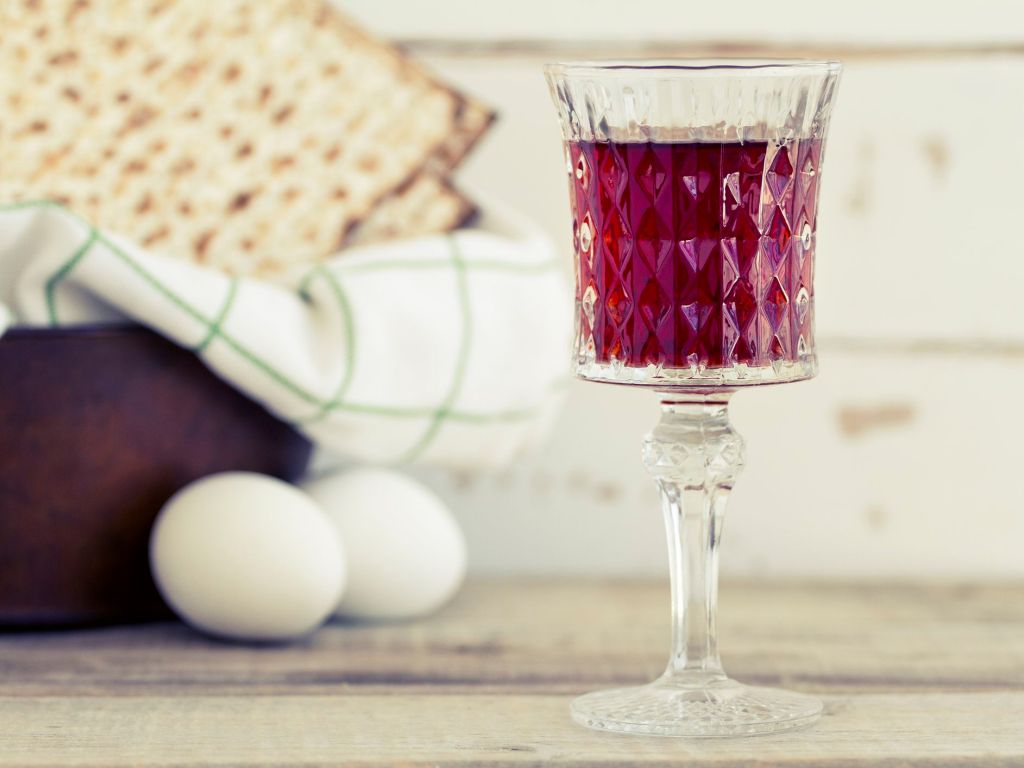
Furthermore, wine was traditionally a staple at the Passover table. To say the Messiah followed all of the traditions of the day would be inaccurate, but it at least appears on the surface that He did consume wine at this singular event, even if He did not at all the previous Passover feasts.

Moving on from there, we see previously that Jesus was accused of being a glutton and a winebibber.

The Son of man came eating and drinking, and they say, Behold a man gluttonous, and a winebibber, a friend of publicans and sinners. But wisdom is justified of her children.

Matthew 11:19

Now I know some will say, “Yeah, but they were lying about the Saviour,” and that would be partially true. However, He was a friend of publicans and sinners. And Jesus Himself said “the Son of man came eating and drinking…” He was not quoting anyone else; He was contrasting Himself with John the Baptist, who was a Nazarite and prohibited from touching the fruit of the vine (Matthew 11:18). Was the Messiah a glutton or winebibber? Absolutely not! For His detractors to say so was an outright lie. But as in most of their accusations, there was a thread of truth, just enough to cause people to doubt Him. (Matthew 27:37 “And set up over his head his accusation written, This Is Jesus The King Of The Jews). It’s interesting that He did not reject their accusations, in life or in death.

The final action of Jesus before death was to partake in sour wine on the cross.

After this, Jesus knowing that all things were now accomplished, that the scripture might be fulfilled, saith, I thirst. Now there was set a vessel full of vinegar: and they filled a spunge with vinegar, and put it upon hyssop, and put it to his mouth. When Jesus therefore had received the vinegar, he said, It is finished: and he bowed his head, and gave up the ghost.

John 19:28-30

Nothing about this occurrence was happenstance: the hyssop (Exodus 12:22) , the vinegar (Psalm 69:21), the cross (Isaiah 53:4-5). While the King James Version says the Messiah was served, and received, vinegar, Strong’s gives us a little bit of insight.

ὄξος óxos, oz-os; from G3691; vinegar, i.e. sour wine:—vinegar.

Strong’s Exhaustive Concordance of the Bible

Historically speaking, sour wine was commonly consumed by soldiers and laborers as a cheap way to quench the thirst by replenishing electrolytes and cooling the throat without the ill-effects of tainted water. Although the taste was undoubtedly worse than modern electrolyte-replenishing sports drinks, the effect was very similar. And no foreman or commanding officer would issue their hired personnel intoxicating beverages while on duty, so we can conclude the mixture that was served to Jesus, while containing fermented wine, was not of the same sort that would produce the effects of intoxication.

Conclusion

It does not take a Hebrew or Greek scholar to see the ill-effects that drunkenness can and almost certainly will produce on an individual, a family, and a society. The abuse of alcohol has ruined many lives and relationships, has been the root cause of fights and indiscretions, and has produced people who are utterly useless to their Creator and consequently everyone else because they are enslaved to it. On a different scale, but just as relevant, so has the abuse of prescription medication, money, food, talents, and even pursuing “the ministry.” All things have the potential to be abused to the detriment of the abuser as well as those affected by him. If one is unable to hold their wine or put it down when they have had enough, it is wise to reject drinking, and it is a sin to continue in these ways.


The Torah and the Prophets make no prohibition against the consumption of wine, although they show examples of what happens when one overindulges. The only time there is a strict rule against the consumption of wine, the same restriction is placed on even raw grapes, and that is when one takes the Nazarite vow (or has it made for them, such as in the case of Samson). In the Apostolic writings, the only time wine is brought up is when elders of the church are told to not be “given to much wine,” meaning of course that they should not be drunkards, or perhaps even daily drinkers. This would have been the perfect opportunity for Paul to use the word “any” in place of “much,” effectively prohibiting the consumption of wine at all. But he did not. Considering this, and the other places we have studied, it seems clear to me the occasional participation of wine in reveling or celebration is considered not only healthy and good, but to be enjoyed without guilt.

For someone to say it would have been a sin for Jesus to consume wine, they would also have to conclude that wine is a sin for all, for He subjected Himself to the same standards and temptations we are held to. However, I think I have sufficiently shown to anyone who has allowed themselves to search the Scriptures that the Father, throughout 66 books, hundreds of commandments and thousands of words, did not prohibit the moderate consumption of wine.

Perhaps the most important part of my study is what is to follow. If a person’s personal convictions disallow the consumption of alcohol, but they break with their convictions and consume what they believe to be a sin, they need to repent, for they have sinned. I believe the Biblical basis for this comes from James.

“Therefore, to him that knoweth to do good, and doeth it not, to him it is a sin.”

James 4:17

This may be a stretch; therefore, I want it to be clear that this is my opinion, but I believe that this passage has a mirrored statement that is unwritten. For instance, if you know to do good, and doeth it not, to you it is a sin, then logic dictates that if you know to NOT do something, but you do it, to you it is a sin. The reason for this is if you believe something is wrong to do, you believe you would be sinning against the Father by doing so. Therefore, if you go ahead and do that thing, you are rebelling against the authority that you believe prohibited it. The rebellion of the heart is what causes that to be a sin.


Finally, we should strive to never be a stumbling-block to the brethren. The Apostle Paul spoke of a similar issue in 1 Corinthians 8. In that passage, he is speaking about meat being sacrificed to idols. Evidently, there was a practice among the heathens of sacrificing meat to the pagan idols, but it was made available to eat afterwards, presumably in its “blessed” condition. He starts by saying idols are nothing but manmade objects and should be rejected, but are harmless because they are dead, so therefore the meat is just as worthy to be eaten after they are given to idols as it was before. However, this disturbed some recent converts. He writes,

“Howbeit there is not in every man that knowledge: for some with conscience of the idol unto this hour eat is as a thing offered unto an idol; and their conscience being weak is defiled. But meat commendeth us not to God: for neither, if we eat, are we the better; neither, if we eat not, are we the worse. For if any man see thee which hast knowledge sit at meat in the idol’s temple, shall not the conscience of him which is weak be emboldened to eat those things which are offered to idols; and through thy knowledge shall the weak brother perish, for whom Christ died? But when ye sin so against the brethren, and wound their weak conscience, ye sin against Christ. Wherefore, if meat make my brother to offend, I will eat no flesh while the world standeth, lest I make my brother to offend.”

1 Corinthians 8:7-13

What Paul is saying here ties in with my previous paragraph; if someone who is weak views drinking wine as a sin, and they observe you, who are considered to be an authority or more mature than they in Christ, partaking of alcohol, it may cause them to either partake as well, thus violating their weak conscience, or it may cause them to fall away altogether, seeing you as a hypocrite or a false authority. Paul says it is better to take the high road and abstain than to cause them to stumble, or worse, fall away. Let not our liberty be the cause for someone who is weaker to fall away. Our goal as followers of Yeshua Messiah is to point others to Him and to disciple them up when they are converted. I am not willing to let wine get in the way of that.

Another interesting article on this subject can be found at https://letgodbetrue.com/bible-topics/index/heresies/did-jesus-make-and-drink-alcoholic-wine/

Spurgeon, the “prince of preachers,” the beloved Baptist minister in the 19th century, spoke on this topic on December 23, 1860 at Metropolitan Tabernacle. The full sermon can be found here: https://www.spurgeon.org/resource-library/sermons/a-merry-christmas/?fbclid=IwAR3ZXQKYgG5aJVOgii4i4cpKWRUFfVRQ0d7AsHsKGRVS0MTQeqB3Vl_GG4o#flipbook/

What Is Sabbath, and When?

To listen to this podcast episode, click What Is Sabbath…And When?

What is “Sabbath?” Hebrew: shabbath שבת (intermission; from shabath שבת’ (to repose; desist from exertion; cause to cease; celebrate, suffer to be lacking, leave, put away (down), rest, etc.). The word itself has no definition or suggestion on what day of the week should be the Sabbath, so we look to the context and examples given by the One who instituted the Sabbath.

The first mention of the word “Sabbath” in the Bible is Exodus 16:23. 

And he said unto them, This is that which Yehovah hath said, To morrow is the rest of the holy sabbath unto the Lord: bake that which ye will bake today, and seethe that ye will seethe; and that which remaineth over lay up for you to be kept until the morning.”

Shabbath occurs 147 times in total, with about 1/3 of those in the Apostolic Writing (New Testament). Many mentions in the latter are in giving a reference point for an event (see if Yeshua healing on the Shabbath; a sabbath day’s journey; they reasoned in the synagogue every sabbath day, etc.). Although the word is not used until much later, the first Shabbath is found in Genesis 2:1-3 

Thus the heavens and the earth were finished, and all the host of them. And on the seventh day Elohiym ended his work which he had made; and he rested on the seventh day from all his work which he had made. And Elohiym blessed the seventh day, and sanctified it: because that in it he had rested from all his work which Elohiym created and made.

So we see here in the second verse of the second chapter of the Word of God that not only did He rest on the seventh day, but that He also blessed and sanctified it.    

Sanctify, Hebrew: qadash לקדש (clean (ceremoniously or morally): consecrate, dedicate, hallow, keep holy, purify, etc.). Greek: hagiazo (purify or consecrate; to venerate – hallow, be holy, etc.)

Blessed, Hebrew: barak מבורך (to adore)

The word qadash (sanctify) in Genesis and throughout Torah and the Prophets and the word hagiazo in the Apostolic Writings have the exact same meaning. In the same way Elohiym’s chosen people are sanctified through Yeshua Messiah, so is the Shabbath sanctified by Him from the beginning of time. We will explore more on this sanctification later.

Did Elohiym move Shabbath to Sunday? It may be surprising to you, but nowhere in Scripture does it explicitly say or even suggest that Sunday – the first day – replaces the seventh day as Shabbath. Messiah rose on the first day of the week, this is true. Could this be because even He would not violate Shabbath to perform His greatest miracle ever done? I suggest that this is the precise reason He rose on the first day. One reason I believe so is because He rose immediately after Shabbath ended. Matthew 28:1-2 

In the end of the sabbath, as it began to dawn toward the first day of the week, came Mary Magdalene and the other Mary to see the sepulchre. And, behold, there was a great earthquake: for the angel of the Lord descended from heaven, and came and rolled back the stone from the door, and sat upon it.” 

The two Marys proceeded to the tomb at the end of Shabbath, which is at sundown. They purchased and prepared spices before Shabbath, “and rested the sabbath day according to the commandment” (Luke 23:56) and then “when the sabbath was past” (Mark 16:1) came “very early in the morning” (v. 2, Luke 24:1) on the first day in order to anoint Him. This timeline is important because they could not purchase the spices except before Shabbath, but they did so and then went to the tomb before first light after Shabbath (John 20:1) to anoint His body. By the time they arrived, He had already vacated the tomb. 

Aside from the day of the week in which Messiah rose from the tomb, there are only 3 other passages from the Apostolic Writings that give any credence to the Christian worship day of Sunday. The first one that is commonly used is John 20:19 

Then the same day at evening, being the first day of the week, when the doors were shut where the disciples were assembled for fear of the Jews, came Jesus and stood in the midst, and saith unto them, Peace be unto you.

It is important to note here two things. The first is rather obvious, if one reads the entire passage rather than just this verse. Going back to verse 1, we know it was the day Messiah rose from the tomb. The ensuing verses tell of the aftermath; Mary going to tell Peter, Peter and John racing to the tomb, the angel telling Mary not to weep, Yeshua finding Mary in the Garden and telling her not to weep, and then Mary going to the disciples again and telling them Yeshua was alive rather than missing. And then verse 19 says, “then the same day at evening.” This is putting into context the timeline. We know the Messiah did not wait days to appear to His faithful disciples; He came to them the same day, at evening. The Jewish day, following the example of the Creation, considers a day from sundown to sundown rather than midnight to midnight as we do in modern times. Therefore, Yeshua appeared to his followers in the evening on the first day, likely mere minutes before the second day began.

The second interesting point was they were assembled out of fear. The disciples were assembled on the first day, not because it suddenly replaced the Shabbath as a holy day, but because it was still the same day in which they believed the body of Yeshua had been stolen. Although Mary had told them Yeshua was alive, they were assembled because they were scared that the Pharisees and Sadducees and Romans were coming for them next, either to accuse or frame them for stealing the body of an executed criminal or to subdue the religious followers of that slain fanatic. This is certainly not something that we need to be commemorating every Sunday, the assembling out of fear. Remember, the first Sunday was fear-day, not a fun-day.

The second passage that is oft-cited as being proof the Shabbath moved to Sunday is Acts 20:7 where it says

And upon the first day of the week, when the disciples came together to break bread, Paul preached unto them, ready to depart on the morrow; and continued his speech until midnight

All we know here is that the disciples in Troas (modern day Dalyan Village, Turkey) broke bread together and fellowshipped on the first day of the week, at least this one time that Paul was there visiting. There isn’t any evidence this was a weekly occurrence, although it certainly could have been. However, to say that this was a widespread practice among all believers in Messiah is pure conjecture. 

Finally, we come to the most popular passage regarding first-day Sabbath, 1 Corinthians 16:2. Let’s read it:

Upon the first day of the week let every one of you lay by him in store, as God hath prospered him, that there be no gatherings when I come.

Ok, so Paul tells the believers at Corinth to bring their offerings together on the first day of the week. Again, he did not tell them to worship on the first day, or to preach on the first day, or to rest and keep the first day holy; he simply told them to bring their offerings. Notice this wasn’t even tithes, but rather offerings out of their abundance, much like the offerings the believers in Jerusalem did early in Acts, when they sold their possessions and gave the money to help the poor. They gave out of their abundance, and Paul told them to bring them all on the first day of the week. There is no evidence that this coincided with a day of worship, although it certainly could be true. It seems much more evident that Paul is commanding this out of convenience for himself, or at the very least, to have a uniform time of offering. This could be compared to the IRS saying, “bring your taxes to the storehouse on the 15th day of April, so that all the money is there when we’re ready for it.” I know that’s a bad analogy, but I think the similarity is there. Paul is telling them, “hey, when I get there is not the time to scramble together an offering for the congregations in Jerusalem. Bring all of your love offerings on the first day of the week so that when I get there it’s all ready to go.” It’s really that simple.

While we’re in the Apostolic Writings, let’s look at some examples of the post-Resurrection believers observing Shabbath. 

But when they departed from Perga they came to Antioch in Pisidia, and went into the synagogue on the sabbath day, and sat down. And after the reading of the law (Torah) and the prophets the rulers of the synagogue sent unto them, saying, Ye men and brethren, if ye have any word of exhortation for the people, say on. Then Paul stood up, and beckoning with his hand said, Men of Israel, and ye that fear God, give audience.” Acts 13:14-16

I encourage you to read on in this passage to verses 42-44 where the whole city, Jew and Gentile alike, came together on the following Shabbath to hear the word of God from Paul and Barnabas. Not the first day, but the seventh. I might remind you these are the same believers who were the first ones to ever be called Christian (Acts 11:26). Yes, that’s right; those called Christians assembled on the Shabbath in the synagogue to hear Torah read. That’s a far cry from the Christians of today. And we say we follow the example of the early church. I beg to differ.

Moving on to Acts 16, we find Paul once again meeting Gentile believers on the Shabbath. Verses 13-15 tell us the story.

And on the sabbath we went out of the city by a river side, where prayer was wont to be made; and we sat down, and spake unto the women which resorted thither. And a certain woman named Lydia, a seller of purple, of the city of Thyatira, which worshipped God, heard us: whose heart the Lord opened, that she attended unto the things which were spoken of Paul. And when she was baptized, and her household, she besought us, saying, If ye have judged me to be faithful to the Lord, come into my house, and abide there. And she constrained us.

Another Gentile city, more Gentile believers, and they met and were ministered to by Paul on the Shabbath. Finally, two more verses.

And Paul, as his manner was, went in unto them, and three sabbath days reasoned with them out of the scriptures. Acts 17:2

And he (Paul) reasoned in the synagogue every sabbath, and persuaded the Jews and the Greeks. Acts 18:4

There are many more verses we could read, but I think this suffices to make the point that Paul, who is often quoted as condoning the Christian belief that Torah is no longer of effect for believers, observed the Shabbath, as did the original apostles and believers in Jerusalem. One may argue that the Shabbath we see here in Acts is speaking of the “new sabbath,” i.e. Sunday, but why then is “the first day of the week” referred to as we previously read in other passages rather than simply being known as Shabbath. Paul, who considered himself a Pharisee, surely knew the distinction and as the author of the epistles would not interchange the terms unless it were true. Besides that, we know the Scriptures are given by the inspiration of the Holy Spirit, and if anyone would know what day the Shabbath is, it would be He who created it.

Also consider the many times Yeshua performed miracles on Shabbath: the man with the withered hand; the cripple at the Pool of Bethesda; a blind man, healed with clay; and perhaps many others. The only miracle we know that did not occur on Shabbath is the one that healed Himself. This could be an example of pulling the ox out of the ditch versus working for your own benefit, an analogy that Yeshua Himself used to counter the Pharisees who sought to stone Him for healing on Shabbath. While He healed the sick and lame wherever He found them, He chose His own time to be healed, and he chose the day after Shabbath. Although I know this was a fulfilment of prophesy, the prophesy foretold what would happen, and not that He rose in order to fulfill prophesy. He chose to stay in the grave an extra day rather than heal Himself on Shabbath. Are we not to follow His example?

If you’re still not convinced that the seventh day is still the Shabbath, I will meet you at your chosen day. Consider that Sunday is the Sabbath, the Lord’s appointed day of worship. “Remember the Sabbath day, to keep it holy,” Elohiym tells us in Exodus 20:8. Remember that word “sanctify” from the beginning? It means to make holy. Elohiym made it holy, and He commands us to keep it holy by our actions and behaviors. What does it mean to keep it holy? Deuteronomy 5:14 says

But the seventh day is the sabbath of the Lord thy God: in it thou shalt not do any work, thou, no thy son, nor thy daughter, nor thy manservant, nor thy maidservant, nor thine ox, nor thine ass, nor any of thy cattle, nor thy stranger that is within thy gates; that thy manservant and thy maidservant may rest as well as thou.” 

Few of us today have servants or working animals, but we can still put this into context. In those days, the servants would have done much of the menial tasks for their masters; harvesting food, preparing meals, washing clothes, etc. In the absence of servants, each person must do these on their own. And if washing clothes and dishes and preparing meals is labor-intensive these days, imagine how much more so in those days. This is why the Hebrews, before Torah was ever given to Moses, were commanded to prepare enough food on the sixth day to carry them over until the end of the seventh day (Exodus 16:23, 25, 29). No person, master or servant alike, was to work. Period. If we disagree on the day of the week on which the Shabbath falls, can we at least agree that the commandment to rest still applies (as seen in Luke 23:56)? And if that be the case, why do you go out to eat on Sunday after church? Are you not causing your “servant” to work? What about momma preparing Sunday dinner? Going shopping, out to the movies after church, watching a football game (or the cheerleaders, whichever you do). Do you not think those things violate the commandment in Deuteronomy? Remember, this was serious enough that Elohiym gave the penalty for violation of this commandment to be death. 

Let’s take this a step further, shall we? Ezekiel 22:26 has harsh words for those violators of Shabbath, and by extension, Torah.

Her priests have violated my law (Torah), and have profaned mine holy things: they have put no difference between the holy and the profane, neither have they shewed the difference between the unclean and the clean, and have hid their eyes from my sabbaths, and I am profaned among them. 

And then verse 31

Therefore have I poured out mine indignation upon them; I have consumed them with the fire of my wrath: their own way have I recompensed upon their heads, saith the Lord God

The most high God, El Elyon, is incensed and angered by the profaning of the holy committed by His own priests. Is not the Sabbath to be made, and kept, holy and sanctified? And we profane it every time we work, or cause others to work, or use it for carnal pleasures, or consume unholy foods. A rack of ribs and some golden fried catfish for Sabbath-day meal, prepared by a “servant” or someone within our household while we watch a football game rife with ungodly commercials and halftime shows and the dishwasher is running and we’re giving horseback rides to the kids. Any and all of that is profaning the holy Sabbath. Does this sound too hard to follow? 

I understand the pushback against this idea. “We’re freed from the bondage of the Law!” some of you say. You are sadly mistaken, if you think so. We are not freed from obeying the Law, but from the penalty that comes from breaking the Law. The Law does not cease to exist. If it has, we must be free to murder or commit adultery or bear false witness. Of course we all know that is not the case, but why do Christians consider the 4th Commandment to be the only one of no consequence today while adhering strictly (in theory) to the other 9? That takes some impressive mental gymnastic skills. 

Finally, I want to point you to Isaiah 56:1-2

Thus saith the Lord (Yehovah), Keep ye judgement, and do justice: for my salvation is near to come, and my righteousness to be revealed. Blessed is the man that doeth this, and the son of man that layeth hold on it; that keepth the sabbath from polluting it, and keepeth his hand from any evil.”

While He offers cursings and judgement for the violators of His Law, our Lord Yehovah promises blessings for us when we observe His holy commandments. Because I fear the Lord and His judgements and desire His blessings, I follow Him to the letter as much as I know to do. When He commands to “Remember the sabbath day to keep it holy,” I must obey, as hard as it is, and as much as it requires adjusting from my traditions and culture. When Yeshua said we have to hate our father and mother in order to follow Him, this is what He spoke of; not hating their persons, but forsaking their traditions that have been passed on to us that we are expected to continue on to our children. I have no other family that keeps the Shabbath, even though I know they love the Lord God, but the traditions that have been passed down through the millennia is contrary to what the Father commanded, and I choose to make a stand here. 

Yeshua said in Mark 2:27-28

The sabbath was made for man and not man for the sabbath: therefore the son of man is Lord also of the sabbath

The Shabbath is a gift of the Father, given to us alongside grace. These are the greatest gifts He could give, and He is the Lord of both. We cannot afford to reject either of these gifts because the consequences are too great. 

Shalom my brothers and sisters.