Thoughts on the Independent Fundamental Baptist Movement

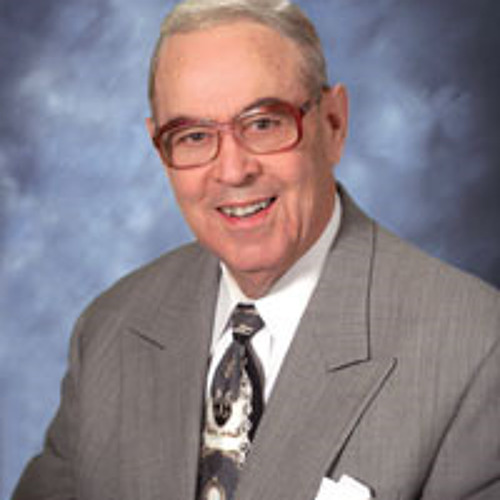
Jack Hyles, pastor of First Baptist Church, Hammond, Indiana and founder of Hyles-Anderson College

Independent Fundamental Baptists are not the problem when it comes to abuse and coverups.

Now that I’ve made that statement, I’m going to make some more that may not be quite as welcome. Before I start, I do want to make this known: I have not seen “Let Us Prey: A Ministry of Scandals,” although I intend to, eventually. However, many people that I know have seen it and have told me what it contains. I am not going to comment further about the documentary because to do so would be dishonest, considering I would be commenting on hearsay.

My background

I joined an Independent Fundamental Baptist (IFB) church by baptism when I was 12 years old. I remained in that circle until I left to pastor a Southern Baptist (SBC) church at age 36 (in March 2023). For 24 years I was a member and served in IFB churches, surrendered to preach in an IFB church, briefly attended an IFB college, was married in an IFB church, and was completely immersed in that culture. If you name a prominent IFB preacher or evangelist, I’ve either heard him preach, read his works, or heard him referenced in sermons for most of my life.

I have known many godly people within the IFB circle. In fact, most of the Christian influences I’ve had in my life come from that sphere, and I can honestly say they were for the most part very godly men, at least as far as I can tell. The Gospel of Jesus Christ is preached faithfully and boldly from pulpits, on street corners, and on foreign mission fields daily by IFB lay preachers and ordained ministers alike. In my experience, the majority of people are salt-of-the-earth believers in Christ, doing their best to follow His example on earth.

However (you had to know I was getting to this), some of the most damaging practices I’ve seen in 24 years of being an IFB Christian have come from those who are entrenched the deepest in the “Fundamental” aspect of IFB. Now, I know at its root, fundamental means they stick by the stuff, holding fast to the fundamentals of the faith. Unfortunately, though, the denomination as a whole (although they would eschew the affiliation with the word “denomination”) has drifted into isolationism and a form of legalism that is very dangerous and ungodly. I know I am speaking in general terms most of the time when I refer to the IFB, so please understand that. But it is hard to find anyone in that movement (pastors, at least, if not lay people) that won’t say in word and/or in practice one or all of the following:

  • If a woman wears pants, she’s a hussy in need of repentance
  • The KJV 1611 is the only inspired word of God in English; all others are per-versions
  • Calvinism is a heresy that is worse than atheism
  • If you don’t go to church 3 times a week (and more if the man of God (MOG) deems it necessary), you are a backslider
  • The MOG is not to be questioned or held accountable
  • Beards are ungodly and unbecoming for a MOG
  • If you don’t stand with Israel, Back the Blue, or get goosebumps when the National Anthem is played in church on July 4th, you are a communist and/or a Democrat
  • If you don’t homeschool your children, or (better yet) put them in the church’s school, you aren’t right with God
  • Don’t drink Diet Coke from a can because from a distance it could be mistaken for a beer

There’s more, but this is just a small sampling of the things I have personally heard over the years. Granted, most of these are not things my pastors have said, but the preachers who filled their pulpits or taught classes in Bible College certainly did. In Bible College, I was pressured to fully subscribe to the high-pressure salesmanship, I mean evangelism, of the ministry; this was a task I failed to accomplish. Later, when in a different church, my wife (who was then my fiancée) was taken to task by some of the leaders because she picked me up from work when my car was broken down. The crime? She did not bring a chaperone (mind you, this was about 1 month before our wedding). Another time, she was chided by the pastor’s wife because the collar of her shirt was 3 fingers’ width from the collarbone, rather than the prescribed 2 fingers’ width. There are many other examples I could share from personal experience, and hundreds more that I have seen or heard from other people.

The problem

This is a major problem that I think actually stems not from the Fundamentalism, but from the Independent part. They hold to “no creed but Christ,” which basically means, each church is only beholden to their pastor’s personal interpretation of the Bible. And, let’s be honest, if he was trained by an IFB pastor or school, chances are his interpretation of the Bible is Jack Hyles‘ interpretation of the Bible. But it’s worse than that, because much of the abuse, tyranny, and legalism is not even remotely an interpretation of the Bible. Sometimes it is framed as such, with taking verses grossly out of context, but often times it is packaged in the generic wrapping of “godliness.” It is extra-biblical, but arbitrary by nature because of being independant. Again, this is a general observation because there are always exceptions. But in an urgency to separate from the centuries-old creeds and confessions of Calvinistic Baptists that gave birth to Charles Spurgeon, Adoniram Judson, William Carey, and the Baptist forefathers of America, they embrace the creeds of Arminians and Dispensationalists like John R. Rice, Jack Hyles, and C.I. Schofield. The “old paths” are actually nothing more than divergent paths that are sometimes less than 100 years old. And their creed is that they have no creed, which is kind of amusing to the outsider.

Old is not always better, and I freely acknowledge that. There are heresies that Paul, James, and Peter had to combat in their day, and some of them persist until the present. However, in an effort to break away from the impure practices in the SBC or other Baptist affiliations, they have created a monster that is swollen with pride and new ideas. I have lost track of how many sermons I have heard that barely went to Scripture but were a diatribe against all other unworthy Baptist affiliations or Bible versions or doctrines. To quote one I heard earlier this year, “I thank God I am not a Calvinist!” as if it were an incurable disease. Never – and I mean not once – have I heard an IFB preacher attempt to explain where the Calvinists went wrong with their interpretation of the words “elect,” “predestination,” or passages like Romans 9, for example. No sir, but they have spent countless precious hours railing against it!

The IFB is a doctrine of legalistic “holier than thou,” at its core. It reminds me of the Pharisee in Luke 18:10-14. It saddens me.

Unfortunately, it is this dedication to outward Godly appearances that has fostered a culture of coverups of abuse and ungodly practices. Sadly, I’ve seen it happen. Thankfully I was not involved and did not know about it until years later, but people I and my wife served alongside were involved in scandals and abuse, some as victims and others as the perpetrators. This mindset of not holding “godly” men accountable to maintain appearances is quite prevalent, but I digress.

I thank God for the many faithful and Godly men and women in the IFB who serve the Almighty. Many of them put me to shame in their dedication and perseverance. However, I would be remiss if I did not make this post, considering I was in that world for so long.

I don’t write this because I am an all-wise “man of God”, or a pastor, or any of that, but because I saw things while I was in that world that I could not speak about then, and that is partly because I couldn’t see clearly or how deep the problem was until I was out.

I don’t write this to anger anyone or to upset anyone, although I know some will experience both emotions.

I write this because people who are in the IFB may be tempted to circle the wagons after the aforementioned documentary hits the screens. Pastors are already speaking out against it and defending the IFB movement. Rather than circling the wagons (which has been going on far too long), you need to be looking within the circle to see if the enemy is inside the circle with you. The enemy is not the SBC or Reformed Baptist church down the road who uses the ESV or doesn’t sing only Fanny Crosby songs in church. Your enemy is my enemy, and that is the wolves in sheep’s clothing. Not all wolves look like Kenneth Copeland. Some look like Jack Schaap.

Independent Fundamental Baptists are not the problem when it comes to abuse and coverups. The Roman Catholic Church has done the same abuses and coverups for much longer. The Methodists’ and Episcopalians’ embrace of sexual immorality is proof of their apostasy. The SBC is full of red flags. There are problems everywhere. Independent Fundamental Baptists need to acknowledge when there is a problem and stop covering it up to save their ministry and reputation. That reputation has already been stained. Now I exhort you to go make restitution and repent and bring honor to the Lord God Almighty’s reputation.

What Is Sabbath, and When?

To listen to this podcast episode, click What Is Sabbath…And When?

What is “Sabbath?” Hebrew: shabbath שבת (intermission; from shabath שבת’ (to repose; desist from exertion; cause to cease; celebrate, suffer to be lacking, leave, put away (down), rest, etc.). The word itself has no definition or suggestion on what day of the week should be the Sabbath, so we look to the context and examples given by the One who instituted the Sabbath.

The first mention of the word “Sabbath” in the Bible is Exodus 16:23. 

And he said unto them, This is that which Yehovah hath said, To morrow is the rest of the holy sabbath unto the Lord: bake that which ye will bake today, and seethe that ye will seethe; and that which remaineth over lay up for you to be kept until the morning.”

Shabbath occurs 147 times in total, with about 1/3 of those in the Apostolic Writing (New Testament). Many mentions in the latter are in giving a reference point for an event (see if Yeshua healing on the Shabbath; a sabbath day’s journey; they reasoned in the synagogue every sabbath day, etc.). Although the word is not used until much later, the first Shabbath is found in Genesis 2:1-3 

Thus the heavens and the earth were finished, and all the host of them. And on the seventh day Elohiym ended his work which he had made; and he rested on the seventh day from all his work which he had made. And Elohiym blessed the seventh day, and sanctified it: because that in it he had rested from all his work which Elohiym created and made.

So we see here in the second verse of the second chapter of the Word of God that not only did He rest on the seventh day, but that He also blessed and sanctified it.    

Sanctify, Hebrew: qadash לקדש (clean (ceremoniously or morally): consecrate, dedicate, hallow, keep holy, purify, etc.). Greek: hagiazo (purify or consecrate; to venerate – hallow, be holy, etc.)

Blessed, Hebrew: barak מבורך (to adore)

The word qadash (sanctify) in Genesis and throughout Torah and the Prophets and the word hagiazo in the Apostolic Writings have the exact same meaning. In the same way Elohiym’s chosen people are sanctified through Yeshua Messiah, so is the Shabbath sanctified by Him from the beginning of time. We will explore more on this sanctification later.

Did Elohiym move Shabbath to Sunday? It may be surprising to you, but nowhere in Scripture does it explicitly say or even suggest that Sunday – the first day – replaces the seventh day as Shabbath. Messiah rose on the first day of the week, this is true. Could this be because even He would not violate Shabbath to perform His greatest miracle ever done? I suggest that this is the precise reason He rose on the first day. One reason I believe so is because He rose immediately after Shabbath ended. Matthew 28:1-2 

In the end of the sabbath, as it began to dawn toward the first day of the week, came Mary Magdalene and the other Mary to see the sepulchre. And, behold, there was a great earthquake: for the angel of the Lord descended from heaven, and came and rolled back the stone from the door, and sat upon it.” 

The two Marys proceeded to the tomb at the end of Shabbath, which is at sundown. They purchased and prepared spices before Shabbath, “and rested the sabbath day according to the commandment” (Luke 23:56) and then “when the sabbath was past” (Mark 16:1) came “very early in the morning” (v. 2, Luke 24:1) on the first day in order to anoint Him. This timeline is important because they could not purchase the spices except before Shabbath, but they did so and then went to the tomb before first light after Shabbath (John 20:1) to anoint His body. By the time they arrived, He had already vacated the tomb. 

Aside from the day of the week in which Messiah rose from the tomb, there are only 3 other passages from the Apostolic Writings that give any credence to the Christian worship day of Sunday. The first one that is commonly used is John 20:19 

Then the same day at evening, being the first day of the week, when the doors were shut where the disciples were assembled for fear of the Jews, came Jesus and stood in the midst, and saith unto them, Peace be unto you.

It is important to note here two things. The first is rather obvious, if one reads the entire passage rather than just this verse. Going back to verse 1, we know it was the day Messiah rose from the tomb. The ensuing verses tell of the aftermath; Mary going to tell Peter, Peter and John racing to the tomb, the angel telling Mary not to weep, Yeshua finding Mary in the Garden and telling her not to weep, and then Mary going to the disciples again and telling them Yeshua was alive rather than missing. And then verse 19 says, “then the same day at evening.” This is putting into context the timeline. We know the Messiah did not wait days to appear to His faithful disciples; He came to them the same day, at evening. The Jewish day, following the example of the Creation, considers a day from sundown to sundown rather than midnight to midnight as we do in modern times. Therefore, Yeshua appeared to his followers in the evening on the first day, likely mere minutes before the second day began.

The second interesting point was they were assembled out of fear. The disciples were assembled on the first day, not because it suddenly replaced the Shabbath as a holy day, but because it was still the same day in which they believed the body of Yeshua had been stolen. Although Mary had told them Yeshua was alive, they were assembled because they were scared that the Pharisees and Sadducees and Romans were coming for them next, either to accuse or frame them for stealing the body of an executed criminal or to subdue the religious followers of that slain fanatic. This is certainly not something that we need to be commemorating every Sunday, the assembling out of fear. Remember, the first Sunday was fear-day, not a fun-day.

The second passage that is oft-cited as being proof the Shabbath moved to Sunday is Acts 20:7 where it says

And upon the first day of the week, when the disciples came together to break bread, Paul preached unto them, ready to depart on the morrow; and continued his speech until midnight

All we know here is that the disciples in Troas (modern day Dalyan Village, Turkey) broke bread together and fellowshipped on the first day of the week, at least this one time that Paul was there visiting. There isn’t any evidence this was a weekly occurrence, although it certainly could have been. However, to say that this was a widespread practice among all believers in Messiah is pure conjecture. 

Finally, we come to the most popular passage regarding first-day Sabbath, 1 Corinthians 16:2. Let’s read it:

Upon the first day of the week let every one of you lay by him in store, as God hath prospered him, that there be no gatherings when I come.

Ok, so Paul tells the believers at Corinth to bring their offerings together on the first day of the week. Again, he did not tell them to worship on the first day, or to preach on the first day, or to rest and keep the first day holy; he simply told them to bring their offerings. Notice this wasn’t even tithes, but rather offerings out of their abundance, much like the offerings the believers in Jerusalem did early in Acts, when they sold their possessions and gave the money to help the poor. They gave out of their abundance, and Paul told them to bring them all on the first day of the week. There is no evidence that this coincided with a day of worship, although it certainly could be true. It seems much more evident that Paul is commanding this out of convenience for himself, or at the very least, to have a uniform time of offering. This could be compared to the IRS saying, “bring your taxes to the storehouse on the 15th day of April, so that all the money is there when we’re ready for it.” I know that’s a bad analogy, but I think the similarity is there. Paul is telling them, “hey, when I get there is not the time to scramble together an offering for the congregations in Jerusalem. Bring all of your love offerings on the first day of the week so that when I get there it’s all ready to go.” It’s really that simple.

While we’re in the Apostolic Writings, let’s look at some examples of the post-Resurrection believers observing Shabbath. 

But when they departed from Perga they came to Antioch in Pisidia, and went into the synagogue on the sabbath day, and sat down. And after the reading of the law (Torah) and the prophets the rulers of the synagogue sent unto them, saying, Ye men and brethren, if ye have any word of exhortation for the people, say on. Then Paul stood up, and beckoning with his hand said, Men of Israel, and ye that fear God, give audience.” Acts 13:14-16

I encourage you to read on in this passage to verses 42-44 where the whole city, Jew and Gentile alike, came together on the following Shabbath to hear the word of God from Paul and Barnabas. Not the first day, but the seventh. I might remind you these are the same believers who were the first ones to ever be called Christian (Acts 11:26). Yes, that’s right; those called Christians assembled on the Shabbath in the synagogue to hear Torah read. That’s a far cry from the Christians of today. And we say we follow the example of the early church. I beg to differ.

Moving on to Acts 16, we find Paul once again meeting Gentile believers on the Shabbath. Verses 13-15 tell us the story.

And on the sabbath we went out of the city by a river side, where prayer was wont to be made; and we sat down, and spake unto the women which resorted thither. And a certain woman named Lydia, a seller of purple, of the city of Thyatira, which worshipped God, heard us: whose heart the Lord opened, that she attended unto the things which were spoken of Paul. And when she was baptized, and her household, she besought us, saying, If ye have judged me to be faithful to the Lord, come into my house, and abide there. And she constrained us.

Another Gentile city, more Gentile believers, and they met and were ministered to by Paul on the Shabbath. Finally, two more verses.

And Paul, as his manner was, went in unto them, and three sabbath days reasoned with them out of the scriptures. Acts 17:2

And he (Paul) reasoned in the synagogue every sabbath, and persuaded the Jews and the Greeks. Acts 18:4

There are many more verses we could read, but I think this suffices to make the point that Paul, who is often quoted as condoning the Christian belief that Torah is no longer of effect for believers, observed the Shabbath, as did the original apostles and believers in Jerusalem. One may argue that the Shabbath we see here in Acts is speaking of the “new sabbath,” i.e. Sunday, but why then is “the first day of the week” referred to as we previously read in other passages rather than simply being known as Shabbath. Paul, who considered himself a Pharisee, surely knew the distinction and as the author of the epistles would not interchange the terms unless it were true. Besides that, we know the Scriptures are given by the inspiration of the Holy Spirit, and if anyone would know what day the Shabbath is, it would be He who created it.

Also consider the many times Yeshua performed miracles on Shabbath: the man with the withered hand; the cripple at the Pool of Bethesda; a blind man, healed with clay; and perhaps many others. The only miracle we know that did not occur on Shabbath is the one that healed Himself. This could be an example of pulling the ox out of the ditch versus working for your own benefit, an analogy that Yeshua Himself used to counter the Pharisees who sought to stone Him for healing on Shabbath. While He healed the sick and lame wherever He found them, He chose His own time to be healed, and he chose the day after Shabbath. Although I know this was a fulfilment of prophesy, the prophesy foretold what would happen, and not that He rose in order to fulfill prophesy. He chose to stay in the grave an extra day rather than heal Himself on Shabbath. Are we not to follow His example?

If you’re still not convinced that the seventh day is still the Shabbath, I will meet you at your chosen day. Consider that Sunday is the Sabbath, the Lord’s appointed day of worship. “Remember the Sabbath day, to keep it holy,” Elohiym tells us in Exodus 20:8. Remember that word “sanctify” from the beginning? It means to make holy. Elohiym made it holy, and He commands us to keep it holy by our actions and behaviors. What does it mean to keep it holy? Deuteronomy 5:14 says

But the seventh day is the sabbath of the Lord thy God: in it thou shalt not do any work, thou, no thy son, nor thy daughter, nor thy manservant, nor thy maidservant, nor thine ox, nor thine ass, nor any of thy cattle, nor thy stranger that is within thy gates; that thy manservant and thy maidservant may rest as well as thou.” 

Few of us today have servants or working animals, but we can still put this into context. In those days, the servants would have done much of the menial tasks for their masters; harvesting food, preparing meals, washing clothes, etc. In the absence of servants, each person must do these on their own. And if washing clothes and dishes and preparing meals is labor-intensive these days, imagine how much more so in those days. This is why the Hebrews, before Torah was ever given to Moses, were commanded to prepare enough food on the sixth day to carry them over until the end of the seventh day (Exodus 16:23, 25, 29). No person, master or servant alike, was to work. Period. If we disagree on the day of the week on which the Shabbath falls, can we at least agree that the commandment to rest still applies (as seen in Luke 23:56)? And if that be the case, why do you go out to eat on Sunday after church? Are you not causing your “servant” to work? What about momma preparing Sunday dinner? Going shopping, out to the movies after church, watching a football game (or the cheerleaders, whichever you do). Do you not think those things violate the commandment in Deuteronomy? Remember, this was serious enough that Elohiym gave the penalty for violation of this commandment to be death. 

Let’s take this a step further, shall we? Ezekiel 22:26 has harsh words for those violators of Shabbath, and by extension, Torah.

Her priests have violated my law (Torah), and have profaned mine holy things: they have put no difference between the holy and the profane, neither have they shewed the difference between the unclean and the clean, and have hid their eyes from my sabbaths, and I am profaned among them. 

And then verse 31

Therefore have I poured out mine indignation upon them; I have consumed them with the fire of my wrath: their own way have I recompensed upon their heads, saith the Lord God

The most high God, El Elyon, is incensed and angered by the profaning of the holy committed by His own priests. Is not the Sabbath to be made, and kept, holy and sanctified? And we profane it every time we work, or cause others to work, or use it for carnal pleasures, or consume unholy foods. A rack of ribs and some golden fried catfish for Sabbath-day meal, prepared by a “servant” or someone within our household while we watch a football game rife with ungodly commercials and halftime shows and the dishwasher is running and we’re giving horseback rides to the kids. Any and all of that is profaning the holy Sabbath. Does this sound too hard to follow? 

I understand the pushback against this idea. “We’re freed from the bondage of the Law!” some of you say. You are sadly mistaken, if you think so. We are not freed from obeying the Law, but from the penalty that comes from breaking the Law. The Law does not cease to exist. If it has, we must be free to murder or commit adultery or bear false witness. Of course we all know that is not the case, but why do Christians consider the 4th Commandment to be the only one of no consequence today while adhering strictly (in theory) to the other 9? That takes some impressive mental gymnastic skills. 

Finally, I want to point you to Isaiah 56:1-2

Thus saith the Lord (Yehovah), Keep ye judgement, and do justice: for my salvation is near to come, and my righteousness to be revealed. Blessed is the man that doeth this, and the son of man that layeth hold on it; that keepth the sabbath from polluting it, and keepeth his hand from any evil.”

While He offers cursings and judgement for the violators of His Law, our Lord Yehovah promises blessings for us when we observe His holy commandments. Because I fear the Lord and His judgements and desire His blessings, I follow Him to the letter as much as I know to do. When He commands to “Remember the sabbath day to keep it holy,” I must obey, as hard as it is, and as much as it requires adjusting from my traditions and culture. When Yeshua said we have to hate our father and mother in order to follow Him, this is what He spoke of; not hating their persons, but forsaking their traditions that have been passed on to us that we are expected to continue on to our children. I have no other family that keeps the Shabbath, even though I know they love the Lord God, but the traditions that have been passed down through the millennia is contrary to what the Father commanded, and I choose to make a stand here. 

Yeshua said in Mark 2:27-28

The sabbath was made for man and not man for the sabbath: therefore the son of man is Lord also of the sabbath

The Shabbath is a gift of the Father, given to us alongside grace. These are the greatest gifts He could give, and He is the Lord of both. We cannot afford to reject either of these gifts because the consequences are too great. 

Shalom my brothers and sisters.